
Two Identical Planes: Beauty, Age, and Function
Two Stanley Bailey No. 5 jack planes, two very different cosmetic histories, and the restoration decisions that let both remain honest working tools.
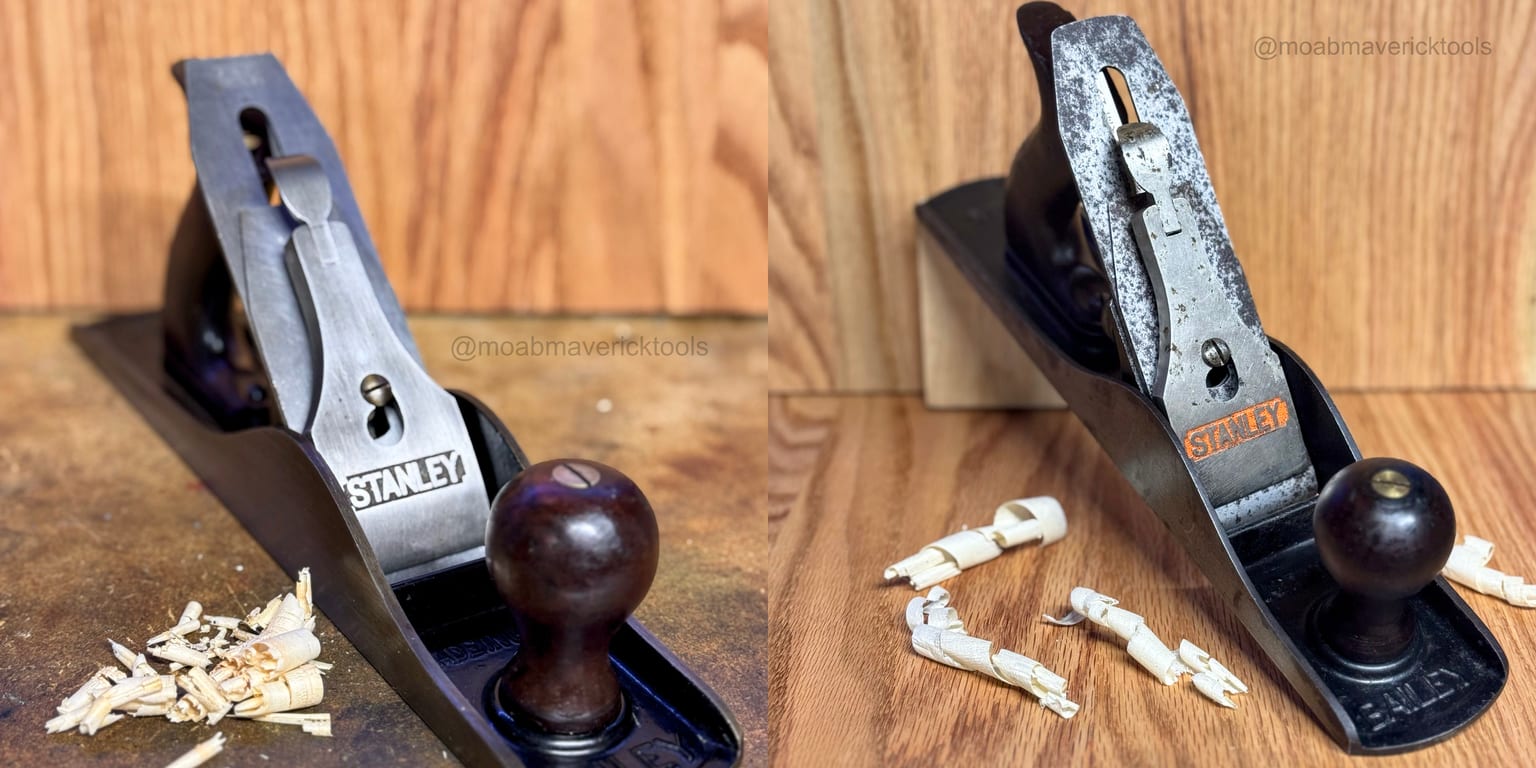
Put these two Stanley Bailey No. 5 jack planes side by side and one of them is probably going to get your attention first.
One has deep black japanning, clean exposed steel, rich wood, and the kind of overall condition that makes an old tool photograph beautifully. The other has staining and pitting on the exposed metal, scratches, worn finish, dents in the wood, and plenty of evidence that it spent a long time doing exactly what Stanley built it to do.
Both came through the Moab Maverick Tools shop. Both were restored as working planes. And both went back to work.
So which one was restored better?
That question gets to the heart of something that is easy to lose sight of when restoring old tools: cosmetic condition and working condition are not the same thing.
The Pretty One
The first No. 5 started with an advantage. It was simply an unusually well-preserved plane. Among the group of planes acquired with it, it was the cleanest example, retaining roughly 85–90 percent of its japanning with comparatively little corrosion.
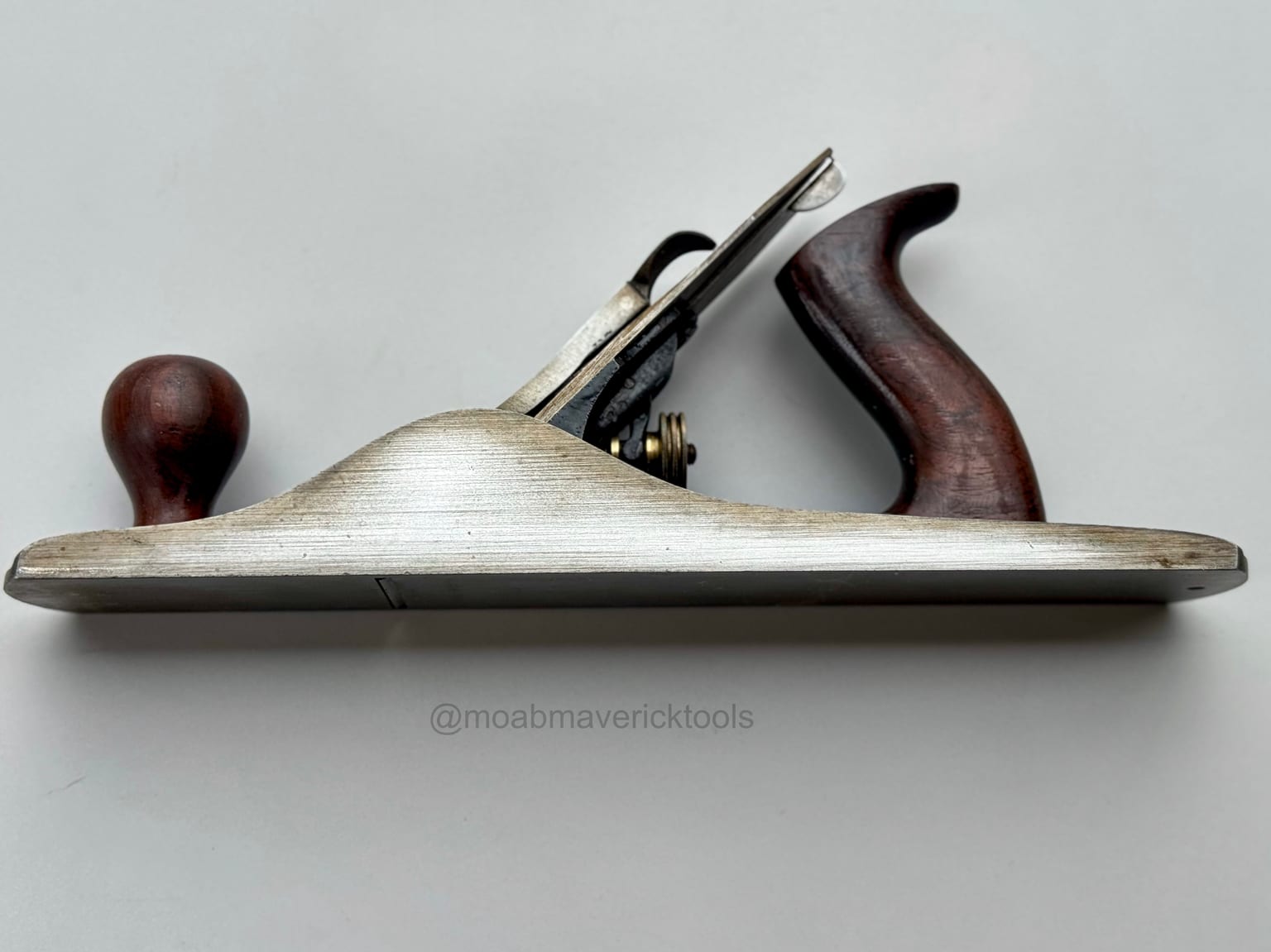
Restoration didn't make it that way. Time—or perhaps a careful previous owner—had already been unusually kind to it.
That didn't mean it only needed to be cleaned up for photographs. The plane was disassembled, the frog and bed cleaned, and the adjusters serviced. The sole was worked as a functional surface. The iron was sharpened and its back prepared, and the chipbreaker mating surface was addressed. The original wooden tote and knob were cleaned and conditioned rather than stripped and refinished, and the exposed metal was protected against future corrosion.
The goal during cleaning was to remove grime while preserving the surviving japanning and original character. That distinction matters, because if an old plane has somehow survived decades with most of its original finish intact, Preserve the Patina doesn't mean finding some way to make it look older.
Original finish is part of the history too.
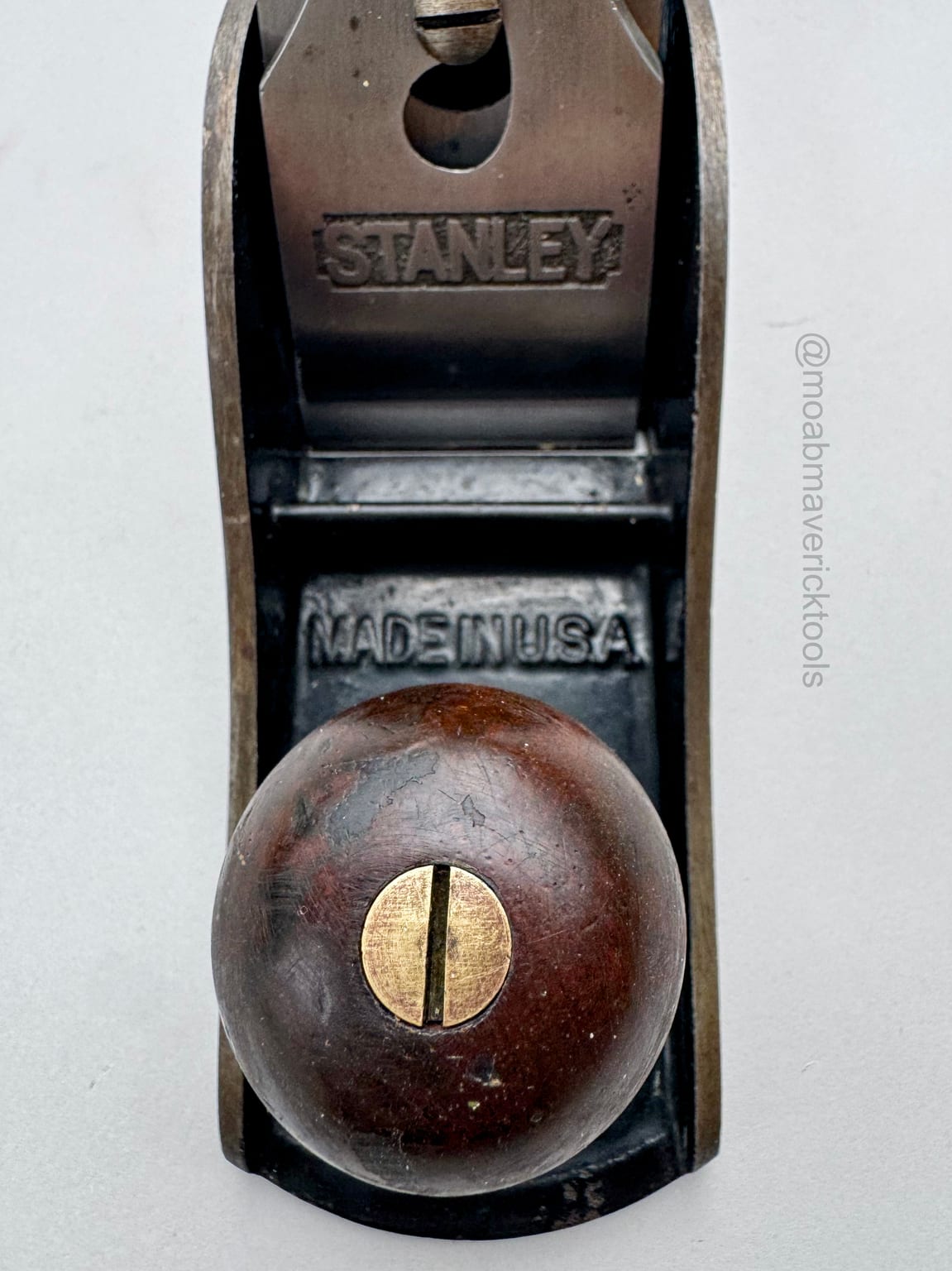
The scratches that remain don't need to be polished away. The wood doesn't need to be sanded until every handling mark disappears, and the exposed steel doesn't need to shine like chrome. Sometimes preservation means recognizing that remarkably good original condition survived and then trying not to destroy it.
When this plane was finished, it looked exceptionally good.
It also cut wood.
The Other No. 5
The second plane had lived a different life. Its exposed metal carried substantially more staining, spotting, and pitting. The lever cap plainly showed its age. The tote and knob had dents and finish wear, while the sides and sole retained cosmetic evidence of decades of use.
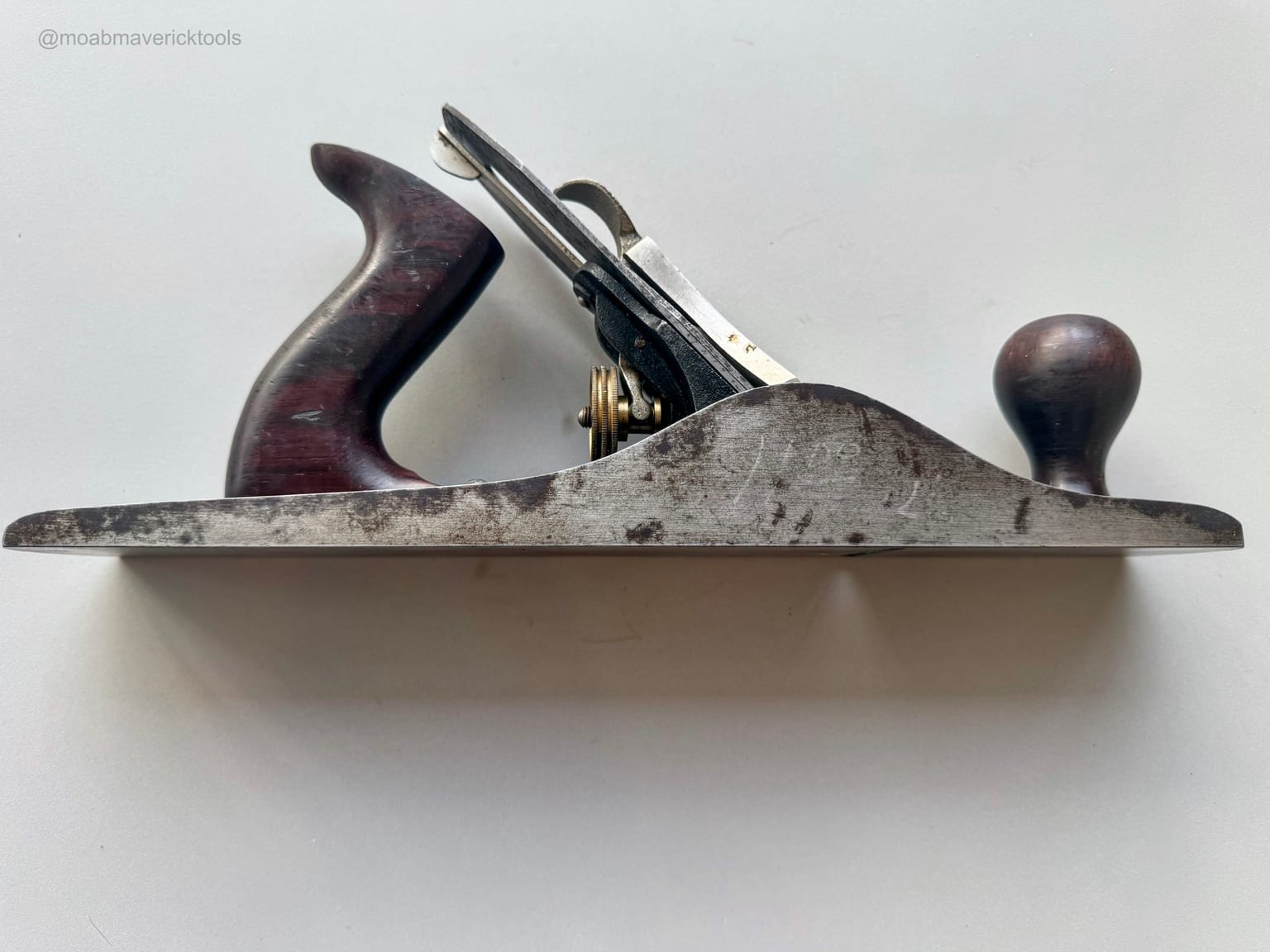
Some of those things could have been reduced. With enough abrasive, enough sanding, enough polishing, and enough refinishing, almost any old tool can be made to look newer.
But why?
The chipbreaker on this plane initially had a visible gap where it should have mated properly with the iron. That mattered, so it was corrected. The iron needed work, so it was reground, honed, and given a mild camber appropriate to the plane's intended use. The sole needed sufficient bearing at the toe, around the mouth, and at the heel to function properly. The frog, bed, adjusters, and other working mechanisms needed to be clean and operating properly.
Those things mattered too.
The staining in a non-critical area of the sole did not. Neither did a dent in the knob.
So they stayed.
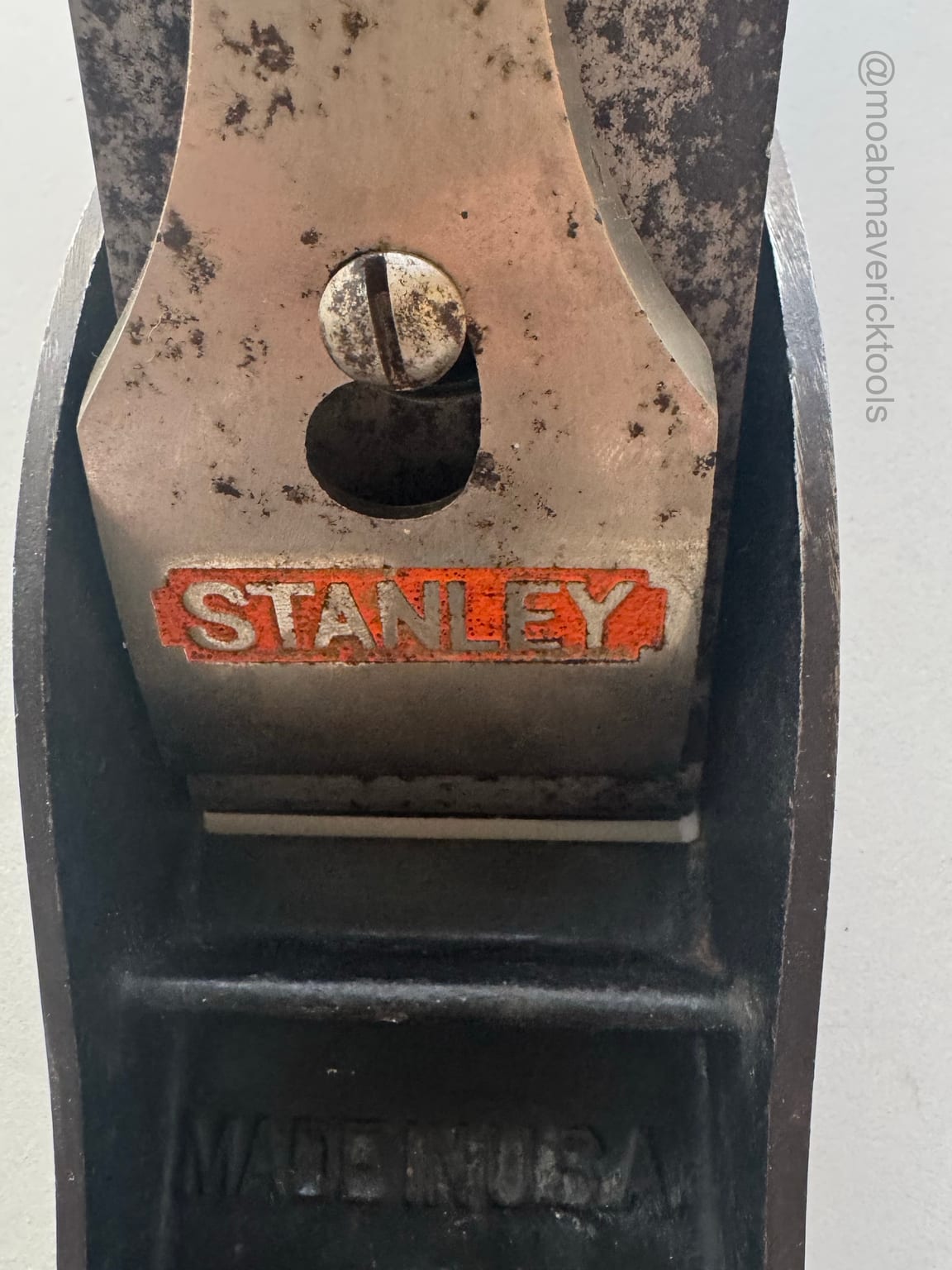
The original finish on the wood was preserved rather than sanded away. Stable patina remained on the iron and other metal where removing it would accomplish nothing useful. Active corrosion was addressed, but the evidence left behind by old corrosion wasn't chased indefinitely in pursuit of bright, flawless steel.
When the restoration was complete, the plane was adjusted and tested on wood. It produced controlled fine shavings without chatter.
The old stains didn't seem to bother it.
It also cut wood.
What Is Patina, Anyway?
"Patina" is one of those words that becomes almost meaningless if it is used to describe everything that happens to an old object.
Rust isn't automatically patina. Dirt isn't patina. A neglected mechanism isn't patina. Neither is a badly sharpened cutting edge or a chipbreaker that doesn't mate properly. Those are conditions that can interfere with the use or continued preservation of the tool, and leaving them untouched isn't preservation.
A scratch in a casting is different. So is worn finish where someone's hand held a tote for years. A darkened piece of wood, an old dent, staining in steel, worn plating, or a shallow pit left behind after corrosion has been stopped may tell us something about the life of the object without preventing it from doing its job.
The difficult part of restoration isn't simply knowing how to remove rust, flatten a sole, sharpen an iron, or clean old wood.
It's deciding what actually needs to be changed.
The Temptation to Keep Going
Restoration has a peculiar problem: many of the processes used to improve a tool don't have an obvious stopping point. If fifteen minutes of polishing makes steel brighter, another fifteen minutes may make it brighter still. If sanding removes damaged finish, more sanding can remove the dents underneath it. If lapping a sole establishes the functional bearing surfaces you need, continuing long enough may eventually produce a uniformly bright surface.
There is always another scratch, another stain, another pit, another imperfection.
But continuing isn't harmless. Abrasives don't know whether they're removing corrosion or original material. A file, stone, sheet of sandpaper, wire wheel, or buffing compound removes some of the tool along with whatever you're trying to eliminate.
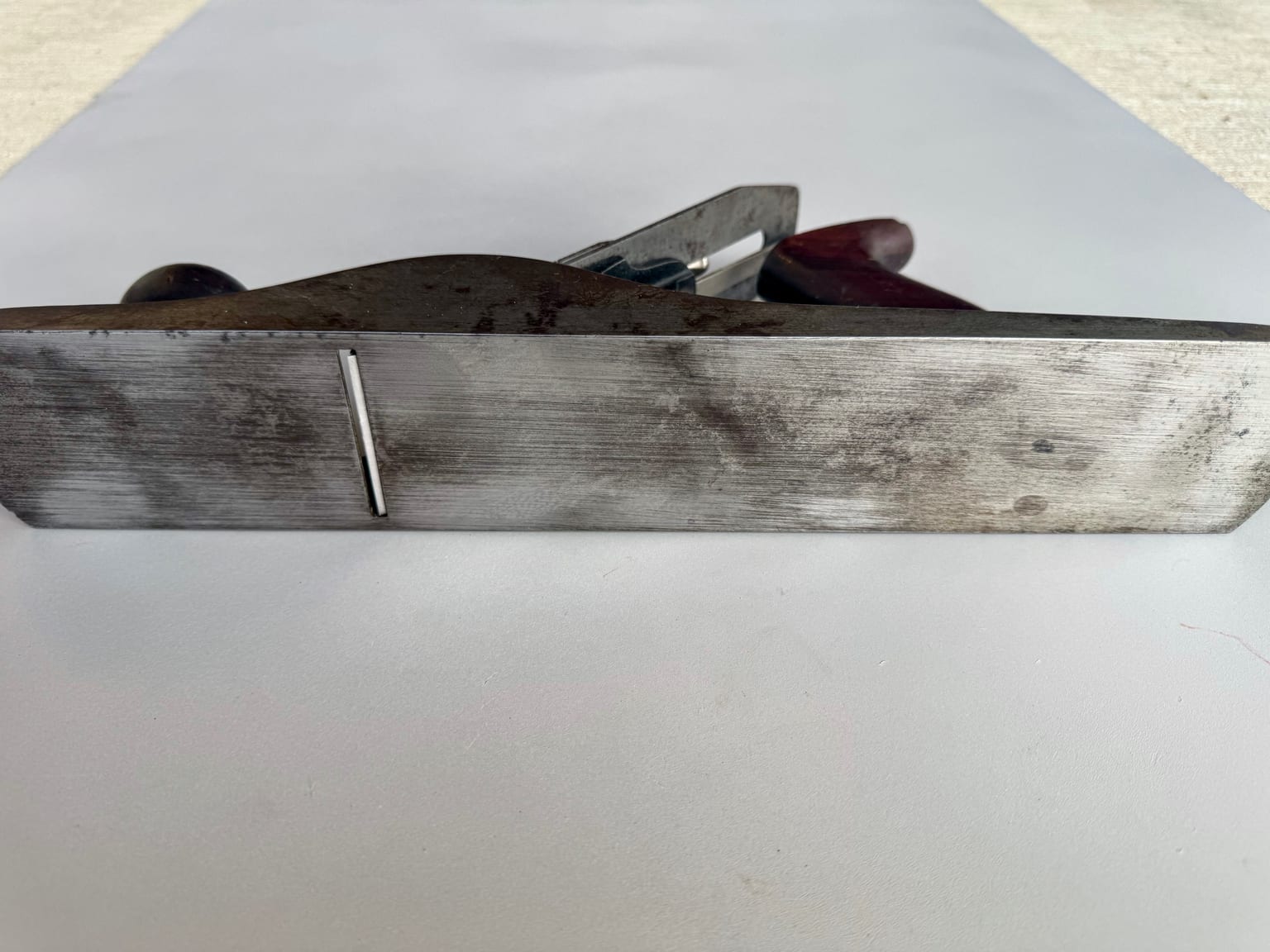
A plane sole provides a particularly good example. The purpose of lapping isn't to create a cosmetically perfect sheet of bright cast iron. It is to establish the bearing surfaces the plane needs to work properly. Once that has been accomplished, continuing to grind away metal merely to eliminate every remaining stain, hollow, or pit spends original material without improving the plane's ability to cut wood.
That material is finite.
The same principle applies elsewhere. An iron can only be ground so many times. Wood removed from a tote can't be put back. Plating polished through to the base metal is gone. Edges softened by aggressive buffing don't become sharp again without removing still more material.
Every working tool will continue to wear in normal use, and someday it may need restoration again. Leaving sound original material in place preserves options for the next person who has to work on it. Removing it for cosmetic perfection consumes those options now.
In that sense, over-restoration can become another form of wear.
At some point, removing evidence of age stops being restoration and starts becoming alteration. Worse, it can consume part of the tool itself without making the tool any better.
That line isn't in exactly the same place on every object. A badly rusted plane may require aggressive work simply to save it. Another may need little more than cleaning, lubrication, sharpening, and protection. A rare collector-grade example might warrant substantially less intervention than an ordinary user plane requiring significant mechanical correction.
The condition of the object has to determine the work—not a predetermined idea of what every restored tool is supposed to look like.
Two Planes, Two Histories
That's what makes these two Stanley No. 5s useful together. They are substantially the same tool, built to perform substantially the same job, but they arrived at the shop carrying very different histories.
One happened to survive in unusually attractive condition. Much of the work involved preserving what remained while restoring the working surfaces and mechanisms that actually mattered. The other arrived carrying far more visible evidence of its working life. Its restoration required many of the same functional decisions, but there was no legitimate reason to erase every cosmetic difference merely to make it resemble the prettier plane.
They shouldn't look identical when they're finished.
They didn't have identical lives.
Trying to make them look identical would require removing some of the evidence that distinguishes one history from the other. It would also require removing original material for no functional reason.
And after all of that additional work, the less-pretty plane wouldn't necessarily cut wood any better.
It would just look less old.
Knowing When to Stop
"Preserve the Patina" can sound like a slogan until there is an actual rusty tool sitting on the bench and a decision has to be made about what happens next.
In practice, it means asking questions. Is this corrosion still active? Does this surface affect how the tool works? Is this finish protecting the material underneath it? Is that mark damage, or simply evidence of use? Will removing it preserve the tool, improve its function, or merely make it prettier?
And perhaps the most important question:
What am I about to remove that I can never put back?
Restoration is necessarily subtractive in places. Rust has to come off. Damaged cutting edges have to be ground away. Dirt has to be removed. Sometimes failed finish has to go. Material should be removed when there is a reason to remove it.
But once original finish, old tool marks, wear patterns, stamps, scratches, aged surfaces—or simply unnecessary thousandths of sound metal—are removed, they're gone.
Knowing how to restore a tool matters.
Knowing when you've done enough matters just as much.
Good Doesn't Have to Mean New
There is nothing wrong with preferring the prettier of these two planes. It is prettier. That first No. 5 is a particularly handsome example of a classic American bench plane, and its surviving condition deserves to be appreciated.
But appearance answers a different question from function.
The second plane doesn't need an excuse for its scratches, stains, worn finish, or dents. They don't make it a failed restoration. They are simply part of the object that survived. Underneath them is a sharpened iron, a properly fitted chipbreaker, working adjusters, appropriate bearing surfaces, protected metal, and a plane capable of producing clean shavings again.
The purpose of restoring an old working tool isn't necessarily to make someone wonder whether it is new.
Sometimes the better result is the one that leaves no doubt that it isn't.