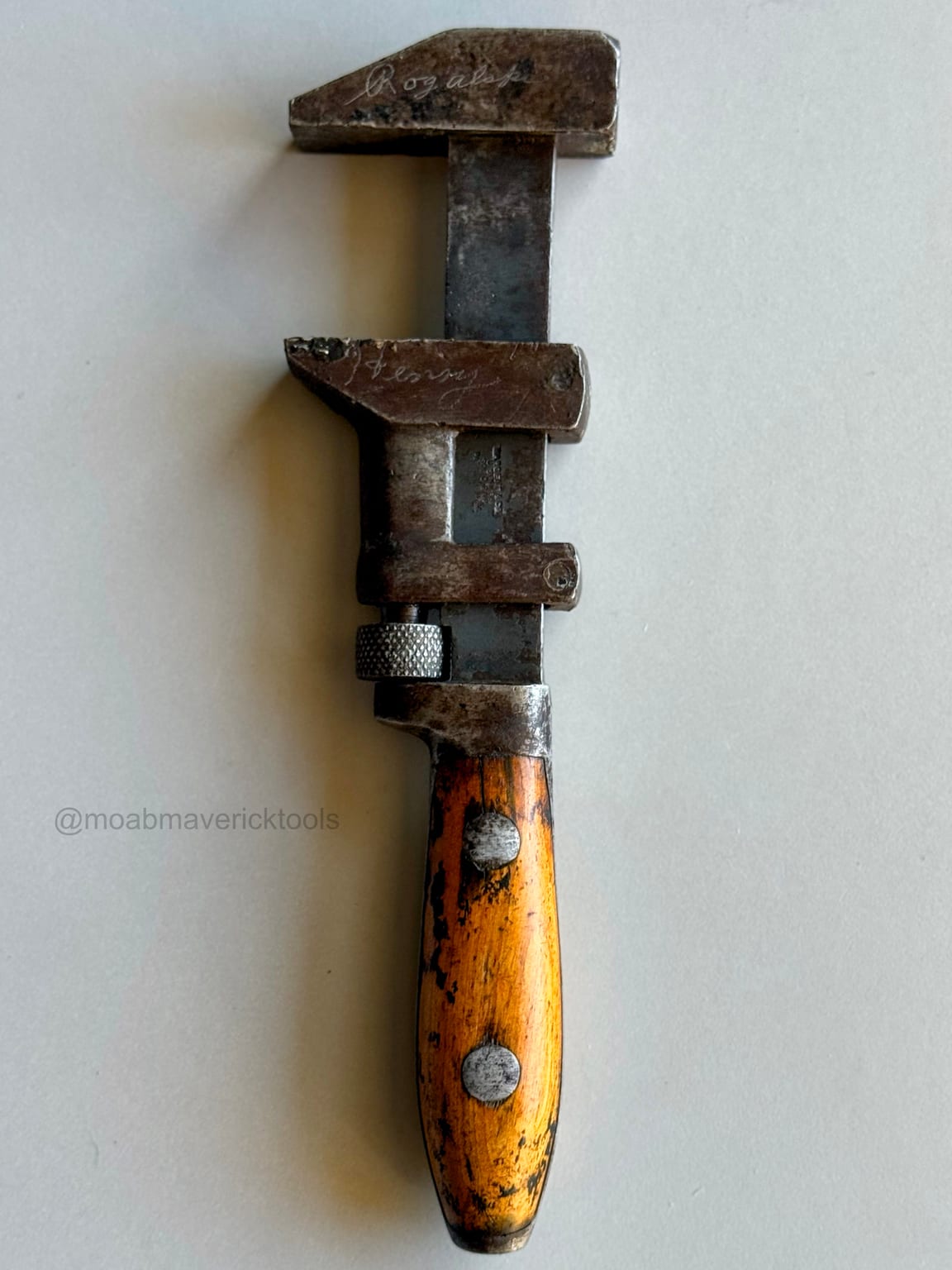
What an Old Wrench Can Tell You
A seized Sargent adjustable wrench, a century of scratches, and why restoration sometimes means knowing when to stop.
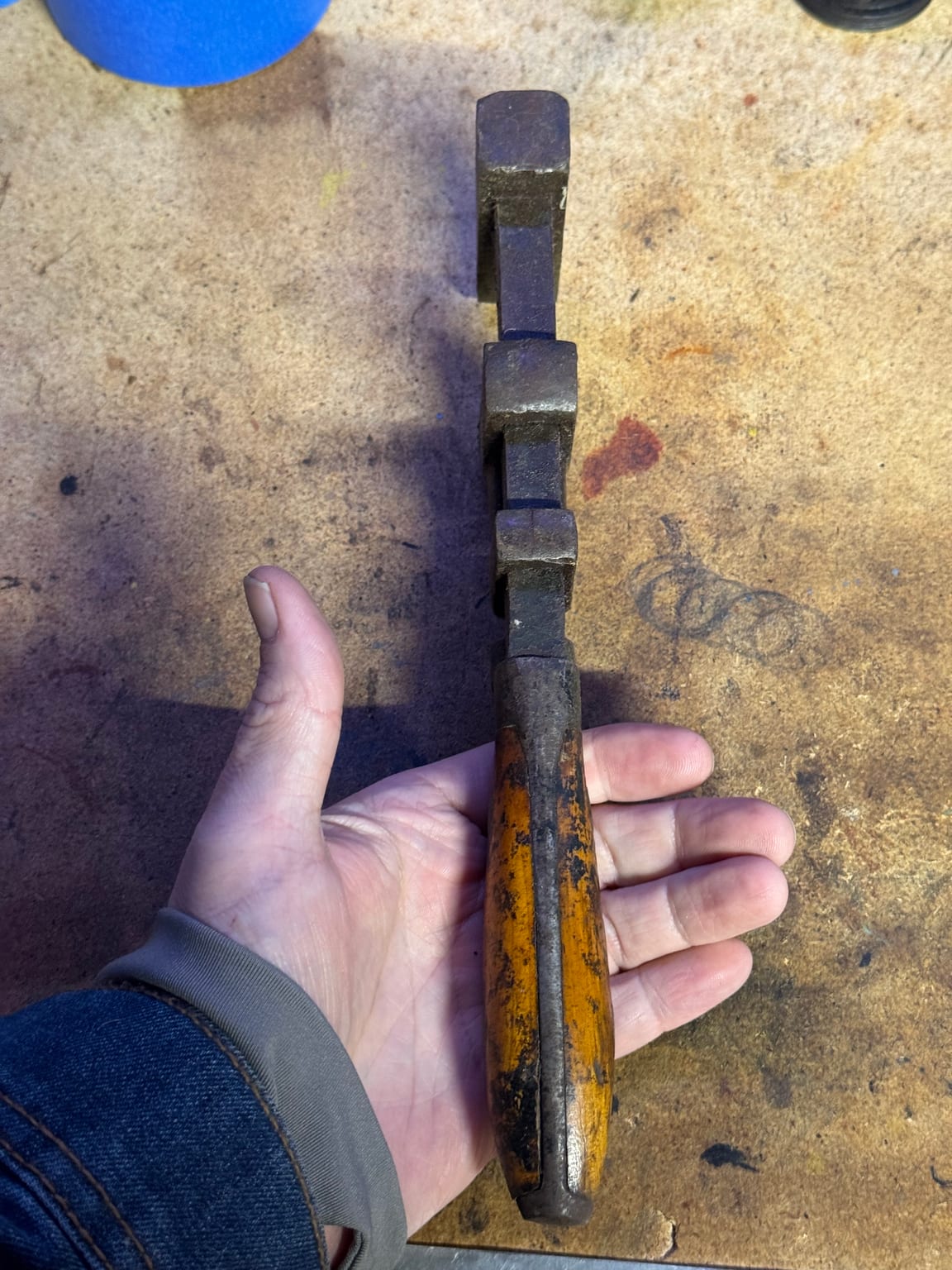
When I bought the wrench, I didn't know who made it.
There wasn't anything particularly remarkable about it at first glance. It was an old adjustable wrench with a wooden handle, heavily oxidized steel, years of accumulated grime, and an adjusting screw that wouldn't move. Whatever markings it once carried were buried well enough that I couldn't identify them.
I bought it anyway.
At the time, Moab Maverick Tools was still very much an experiment. The idea was simple: find old tools worth saving, restore them, and sell them so the hobby could pay for itself. I had already decided what I didn't want to do. I'd seen restorations where every trace of age was stripped away—steel polished bright, wood sanded clean, old finishes replaced with glossy new ones until a century-old tool looked as though it had been manufactured last Tuesday.
That wasn't what interested me.
An old tool should look old.
It just shouldn't be rusting away.
I didn't know it yet, but that anonymous frozen wrench was about to teach me why the distinction matters.
Getting It Working Again
The first problem wasn't history. It was mechanical.
The adjusting nut was completely seized. Rust, dried lubricant and accumulated debris had locked the screw and movable jaw together. There was a legitimate possibility that I'd bought a wrench that would never again function as one.
So I bought a can of Kroil, soaked the mechanism, cleaned what threads I could reach, applied some controlled heat and gave it a little persuasion.
It moved.
Not much at first, but enough. Once the screw turned, I could close the jaw and expose more of the threads. Those could be cleaned, lubricated and worked back and forth. Before long the adjuster went from frozen to smooth enough to operate easily by hand.
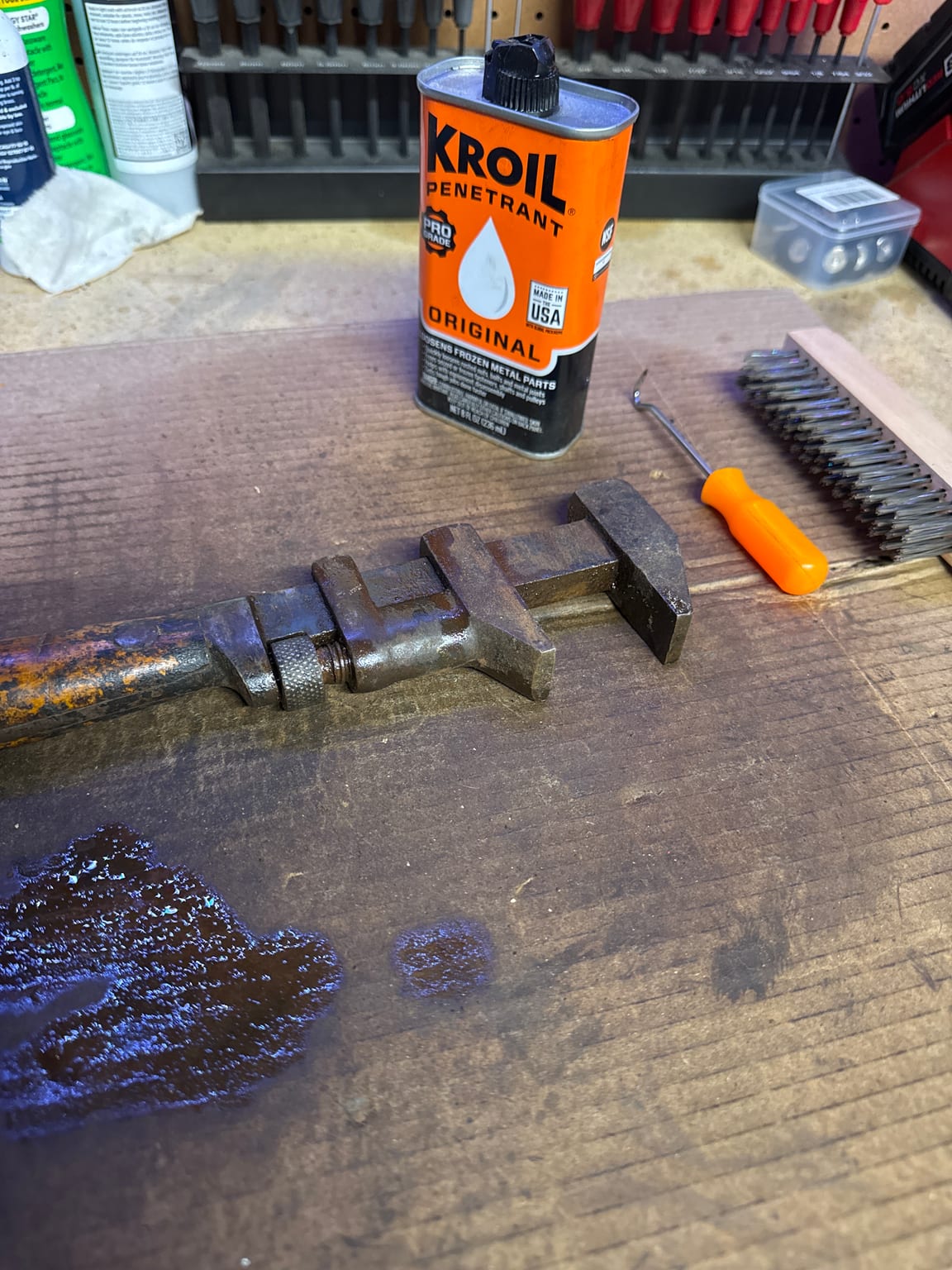
That was satisfying in its own right. A tool that hadn't worked when I picked it up was a working wrench again.
But getting it working turned out to be the least interesting part.
Something Under the Rust
With the mechanism sorted, I started cleaning the steel.
The objective wasn't to polish it. It still isn't when I restore a tool today. I want to remove active rust and contamination and leave a clean, stable surface ready for oil and wax. Darkened steel, old scratches, staining, worn finish and the other evidence of age aren't things I'm trying to eliminate.
That distinction became important almost immediately.
I had cleaned only the upper jaw when something appeared beneath the oxidation.
Writing.
For a moment I thought I'd finally uncovered the maker's mark.
I hadn't.
Someone had scratched a name into the wrench.
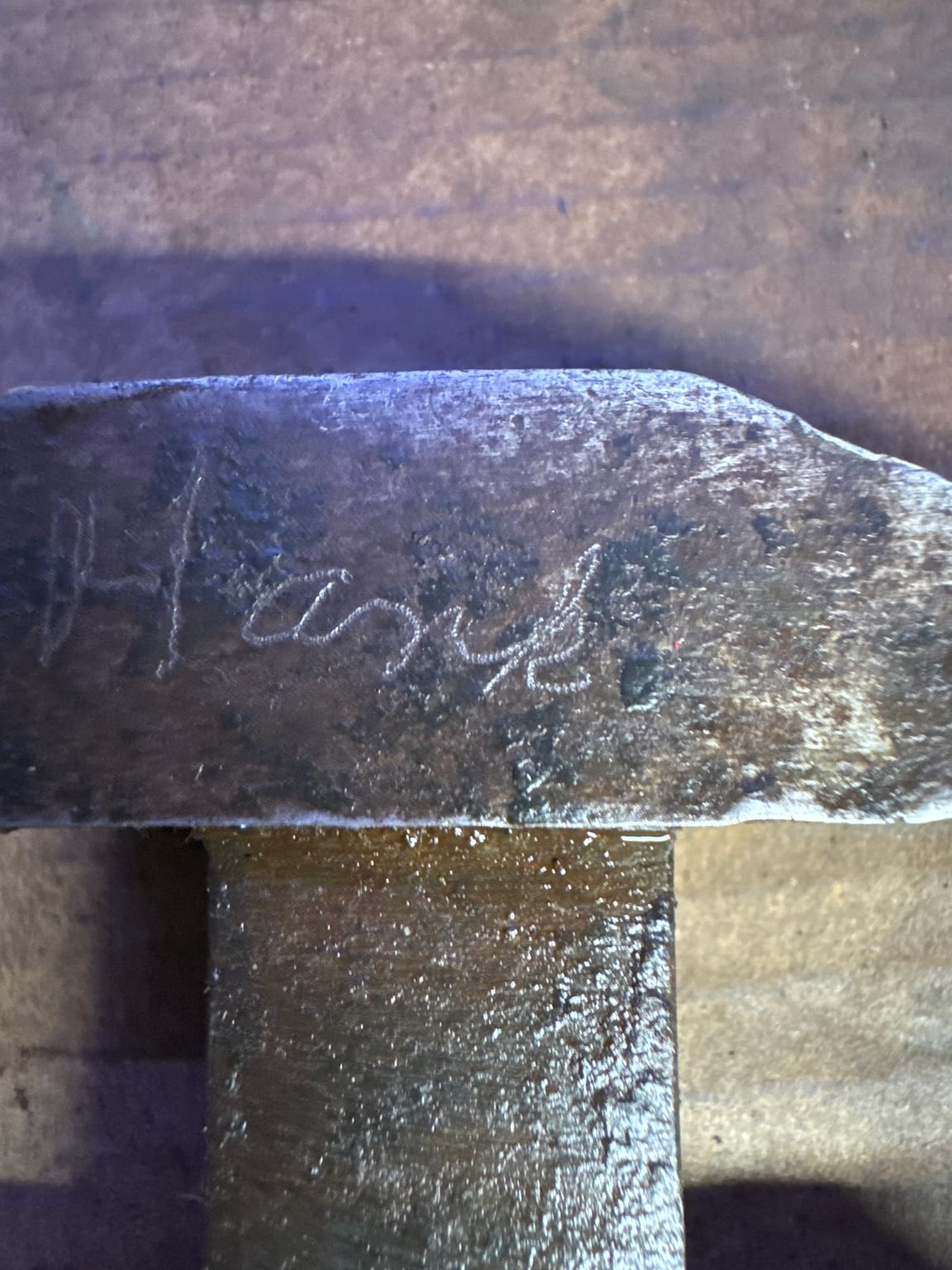
I kept cleaning.
Another marking appeared on the lower jaw: 2008. It looked less like a date than some sort of inventory, job or shop designation, although there was no way to know for certain.
Then another: something resembling H-6036.
And then, on the other side, faint stamped letters began emerging from the steel.
This time it wasn't somebody's name.
I wrote at the time:
“Jackpot … I found that elusive makers mark on the other side. Starting to really love this tool. It's like archaeological discovery.”
That's still the best description I have for what happened.
The excitement wasn't one dramatic revelation. It was the accumulation of them. Every section I cleaned seemed to expose another fragment of the wrench's past.
And now I finally had the beginning of an identity.
?ARGENT & CO.
The stamp was badly worn.
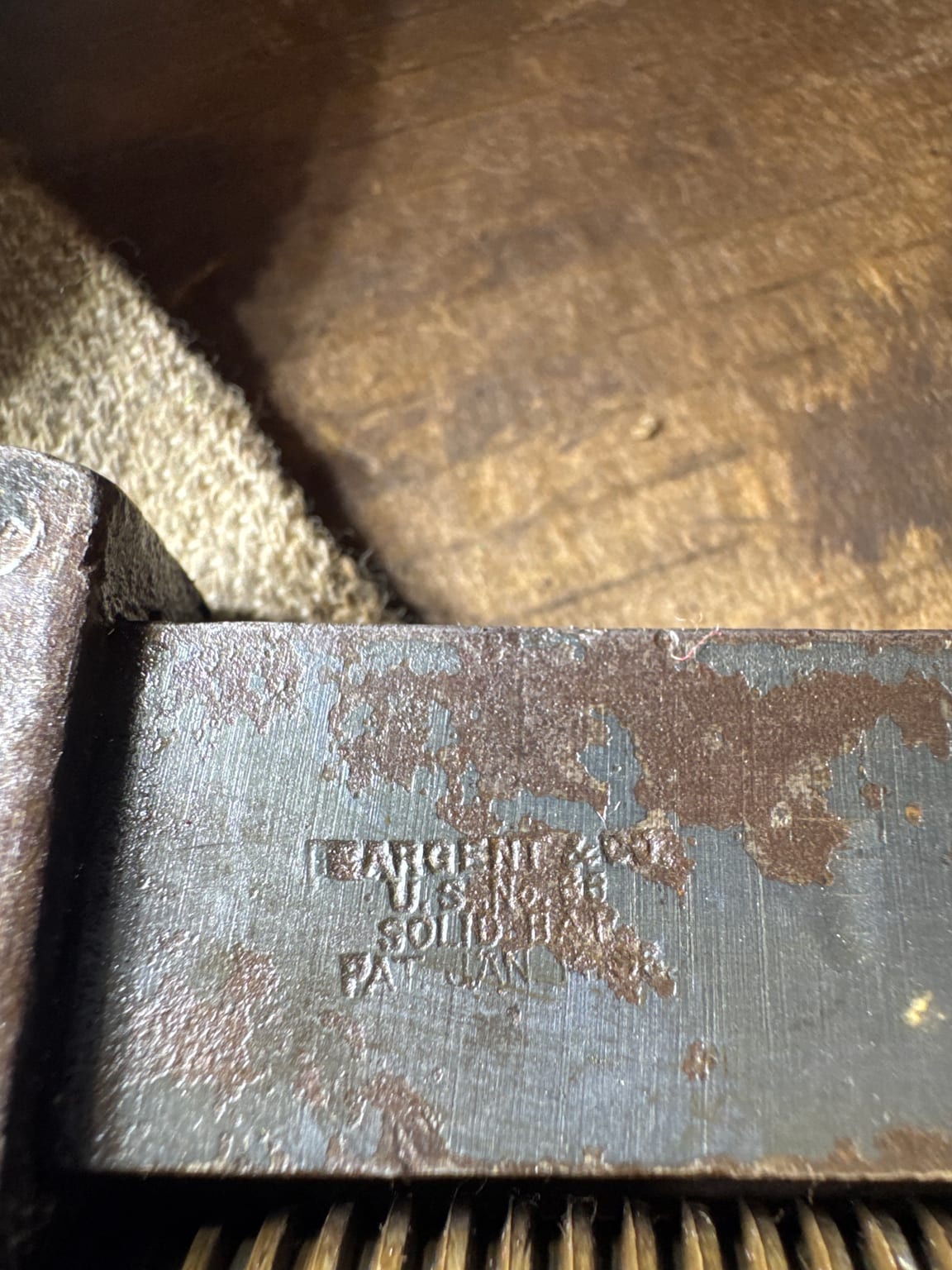
Under a magnifying lamp, I could make out enough to start transcribing it:
?ARGENT & CO
U.S. NO. ??
SOLID BAR
PAT JAN 14/9?
The first letter looked like it could be an S.
Sargent?
More cleaning and research eventually resolved the stamp:
SARGENT & CO.
U.S. NO. 88
SOLID BAR
PAT. JAN. 14/96
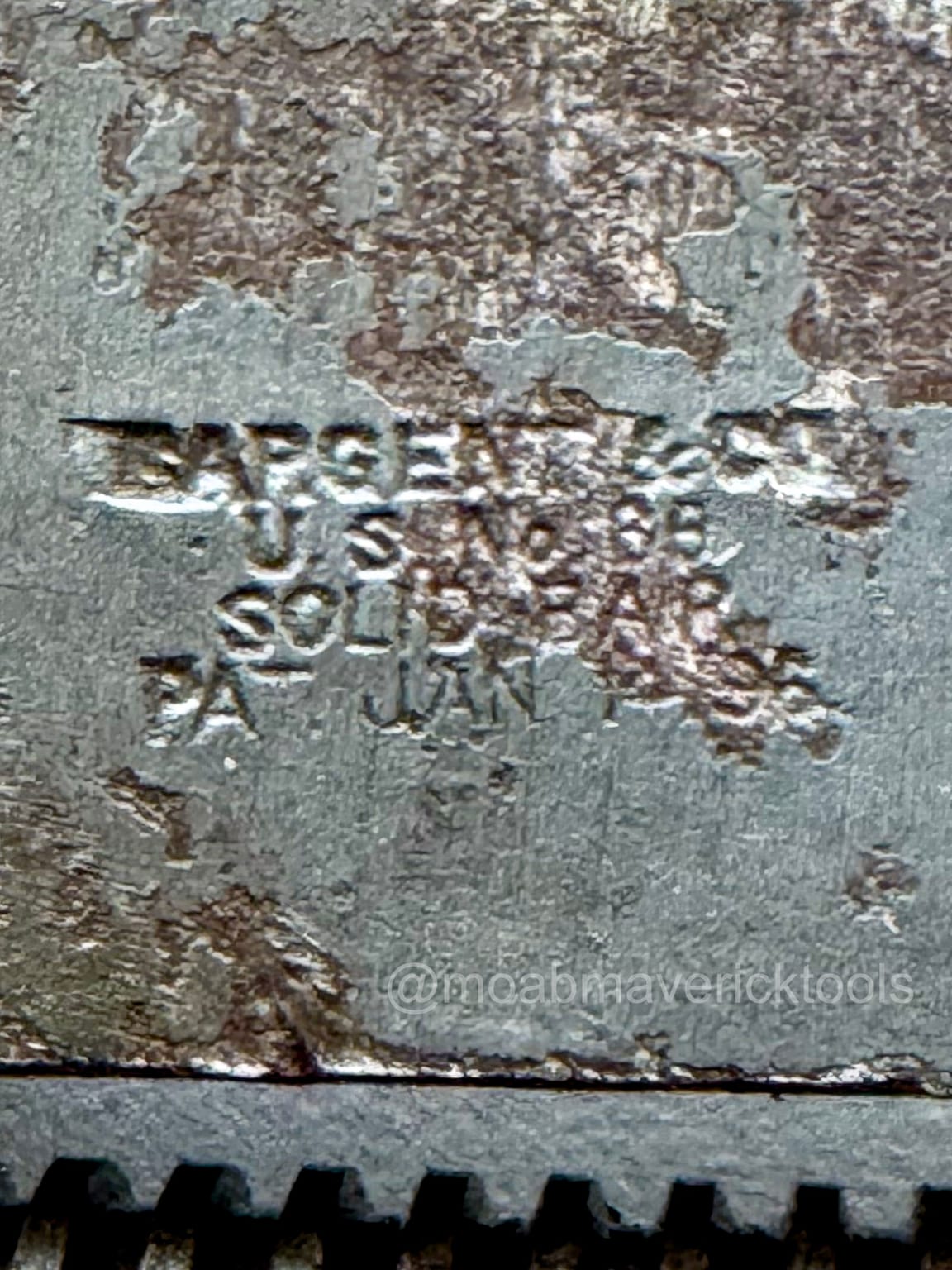
The generic old wrench wasn't generic anymore.
Sargent & Co. was a major New Haven, Connecticut hardware manufacturer whose product range extended well beyond the planes for which many tool collectors know the company today. Sargent had moved its manufacturing operation to New Haven in the 1860s and produced an enormous range of hardware and hand tools. Surviving company literature includes tool catalogs from the 1890s onward, and Smithsonian Libraries preserves an extensive collection of Sargent trade literature covering hardware and hand tools.
More useful for this wrench was that January 14, 1896 patent marking. Period-tool research and surviving marked examples associate that date with a solid-bar adjustable-wrench patent issued to Robert Cosmos Ellrich. Other surviving Sargent wrenches carry the same patent date.
There is considerably more that I would like to know about Sargent's No. 88 Solid Bar wrench than I can document confidently. Period Sargent catalogs survive—including tool sections from 1894 and 1910—but good model-specific information is surprisingly difficult to find online.
That is an important part of documenting old tools too.
Sometimes the answer is I don't know.
A plausible story isn't the same thing as history.
The Other Maker's Marks
The Sargent stamp told me who manufactured the wrench.
The scratches told a different story.
There were several hand-scribed markings, including what appeared to be Hank and Henry, along with the partial surname beginning Rog... and the more structured numbers.
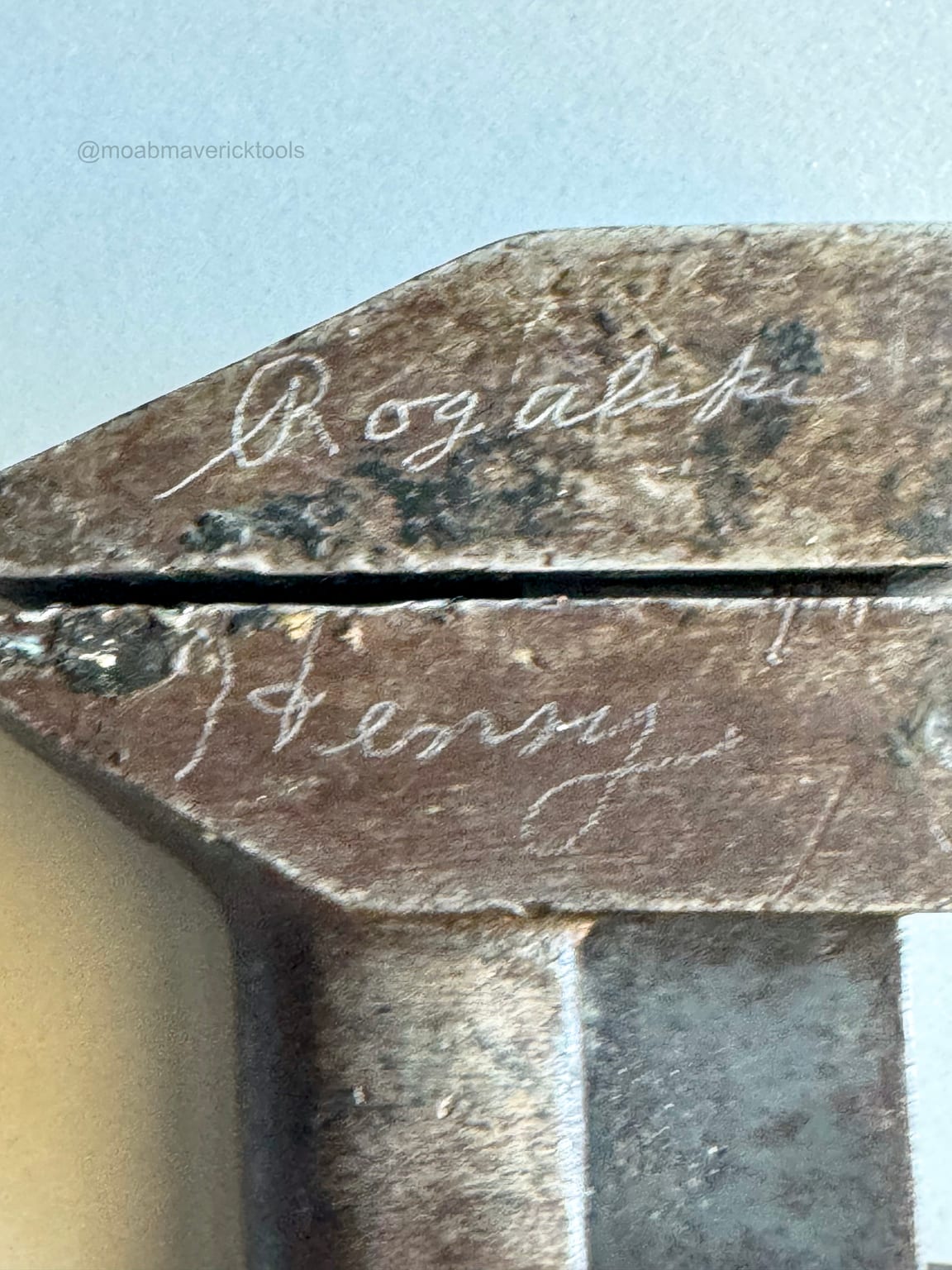
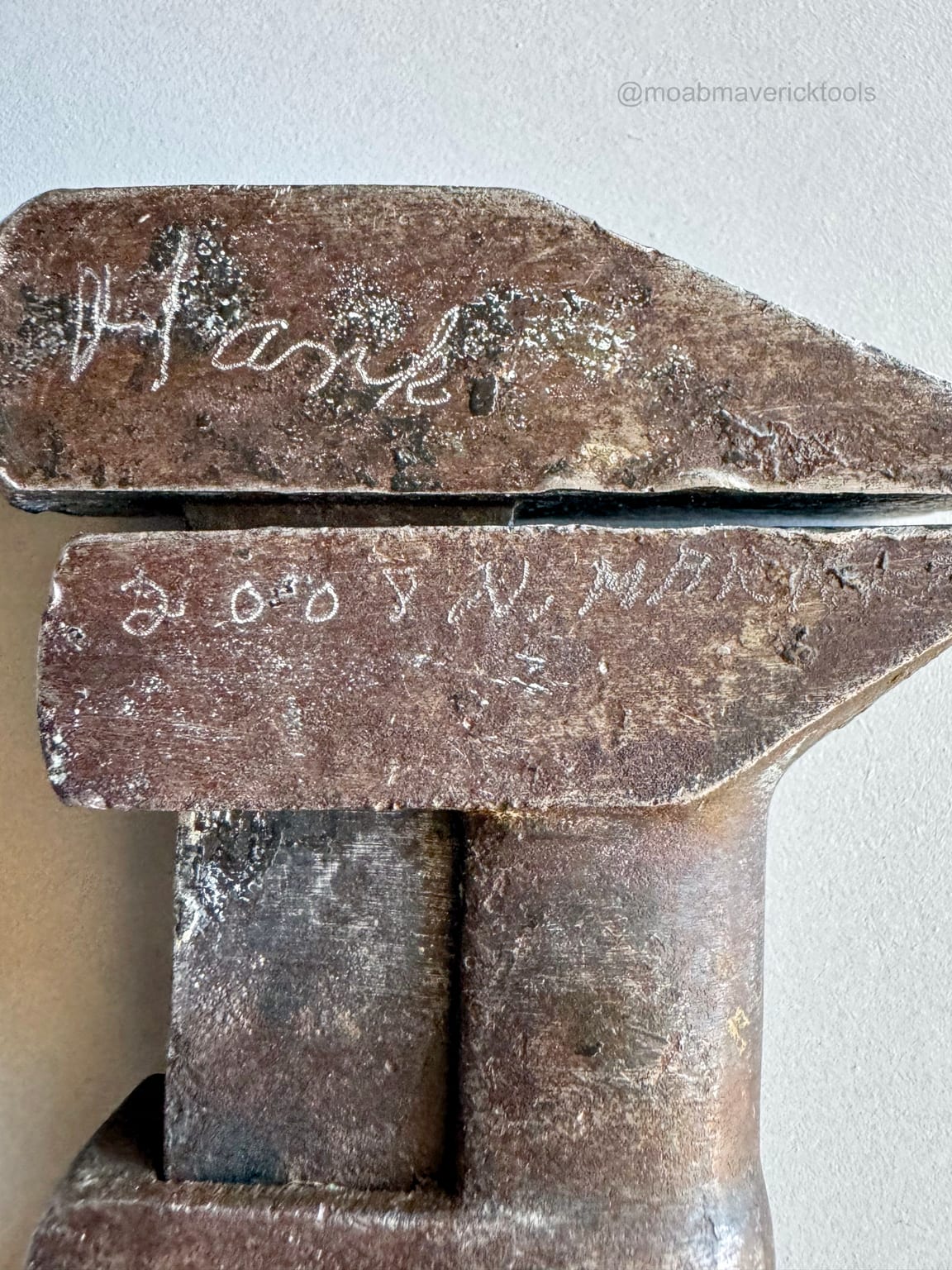
Henry and Hank can refer to the same person, so the repeated names may represent one owner. They may not. H-6036 and 2008 look like the sorts of designations that might have been applied in an organized shop, tool crib or industrial setting.
Again: might have been.
There isn't enough evidence to turn those marks into a factory, railroad, mill or machine-shop history simply because one of those possibilities sounds good.
But there was one person I could ask.
I'd bought the wrench through Facebook Marketplace from a woman named Peg. I had noticed her listings long before buying anything from her because they appeared repeatedly in my feed with variations on the same title:
Peg's Grandpa's ______.
One old tool after another.
I didn't meet Peg when I bought the wrench; it was a porch pickup. But the way she'd listed those tools made something clear even without knowing her grandfather's story: these weren't random thrift-store finds. They had come from somebody's working collection.
After the restoration I sent her a message showing what had emerged. I told her the wrench worked again and described the names and markings I'd uncovered.
I was fishing.
Subtly, but definitely fishing.
Peg replied:
“Oh my Hank Rogers was grandpa's best friend”
One small piece fell into place.
That doesn't establish who first owned the wrench. It doesn't tell us where Hank Rogers worked, when he marked it, whether every Hank and Henry refers to him, or what the numbered markings mean.
But Hank was no longer merely scratches on steel.
He was a person.
The Yellow Handle That Wasn't Yellow
The wood had its own surprise.
At first, the handle looked as though it might have been painted yellow sometime during its life. It was dirty, dark in places and covered with old residue. There were also cracks near the top of both wooden scales, so before continuing with the metal work I protected the entire handle and later stabilized the cracks rather than simply sanding everything away.
Once the grime and degraded surface material were carefully worked back, it became apparent that the color wasn't yellow paint at all.
It was the wood.
Years of oil and handling had given the original handle a deep golden color. The grain was still visible beneath it.
I remember deciding I'd probably cleaned the wood a little farther than initially planned because how it felt in the hand mattered to me. But the objective remained the same: make it clean, stable and pleasant to use without erasing what age had done to it.
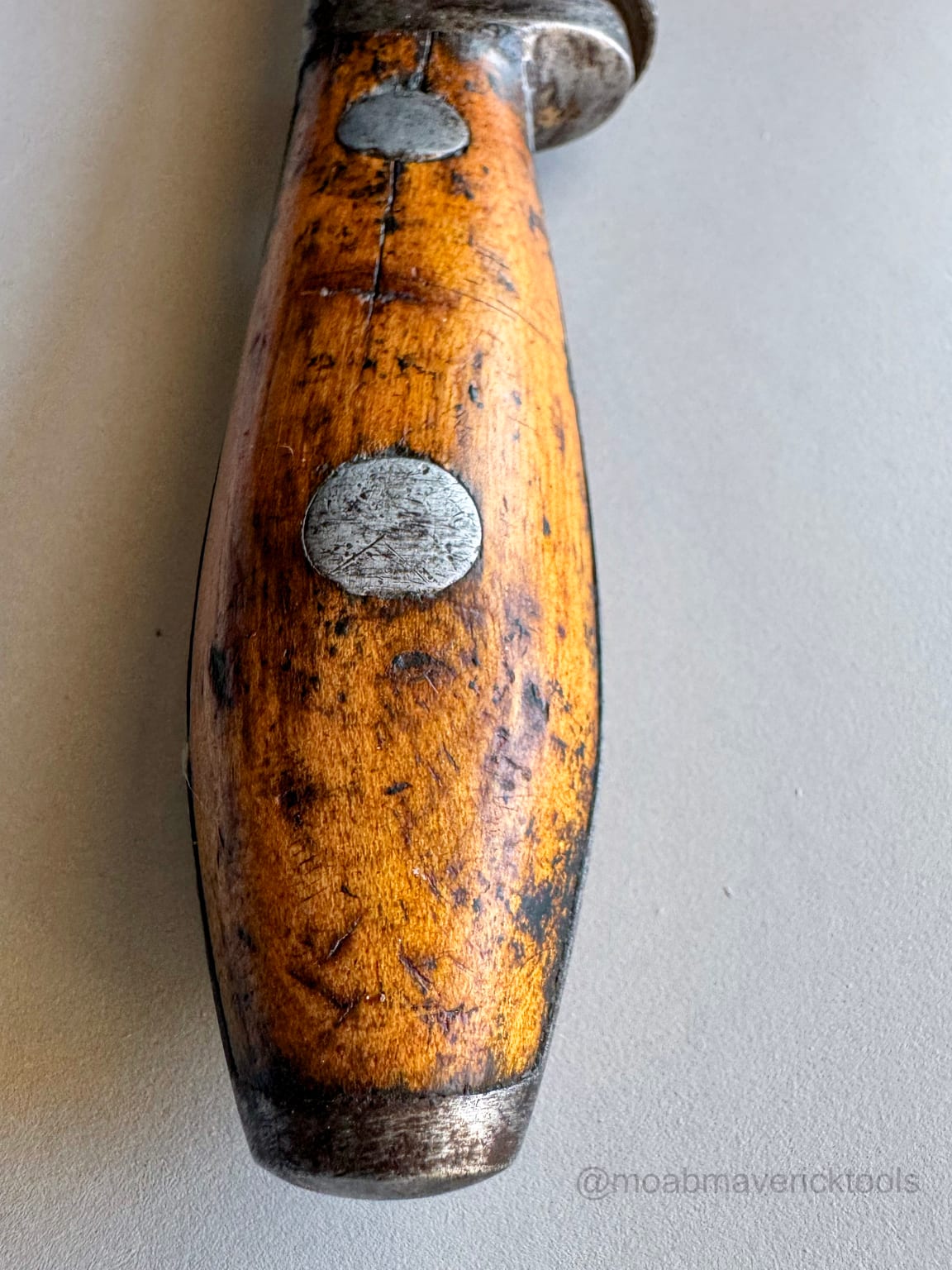
The dents stayed.
The dark areas stayed.
The worn contours stayed.
So did the scratches in the steel.
What Does “Preserve the Patina” Actually Mean?
“Preserve the Patina” can sound like a slogan until you have to decide what stays and what goes.
This wrench provides a pretty good answer.
The frozen adjuster wasn't patina. I fixed it.
Active rust wasn't patina. I removed it.
Accumulated grime wasn't patina. I cleaned it.
Cracks that threatened the original handle weren't patina. I stabilized them.
But the darkened steel didn't prevent the wrench from working.
Neither did the worn wood.
Neither did Hank's name.
Neither did the dents, scratches, stains or the faint Sargent stamp that had survived more than a century of use.
Those things weren't damage that needed correcting. They were evidence.
And once they're removed, they cannot be restored.
You can blue steel again. You can stain new wood to look old. You can distress a finish. You can even reproduce a faded manufacturer's stamp.
What you cannot manufacture is the fact that somebody once scratched his name into a wrench because, for whatever reason, it mattered that people knew it was his.
You cannot put another century of honest handling back into a wooden grip.
A Tool Doesn't Need to Become a Museum Piece
I didn't keep the Sargent wrench.
That matters to this story.
I enjoy restoring tools, but I never wanted restoration to become an excuse for accumulating another collection. Years ago I built RC cars for much the same reason: I enjoyed building them far more than I cared about owning a shelf full of them. I'd finish one, sell it and build another.
Old tools work the same way for me.
There are exceptions. I'll keep something I legitimately need, and occasionally something from a bundle has too little resale value to justify selling separately. But the objective isn't possession.
The Sargent stayed in my inventory for quite a while. When it finally sold, there was a moment of recognition—that's the cool Hank wrench—but no regret about letting it go.
That is what is supposed to happen.
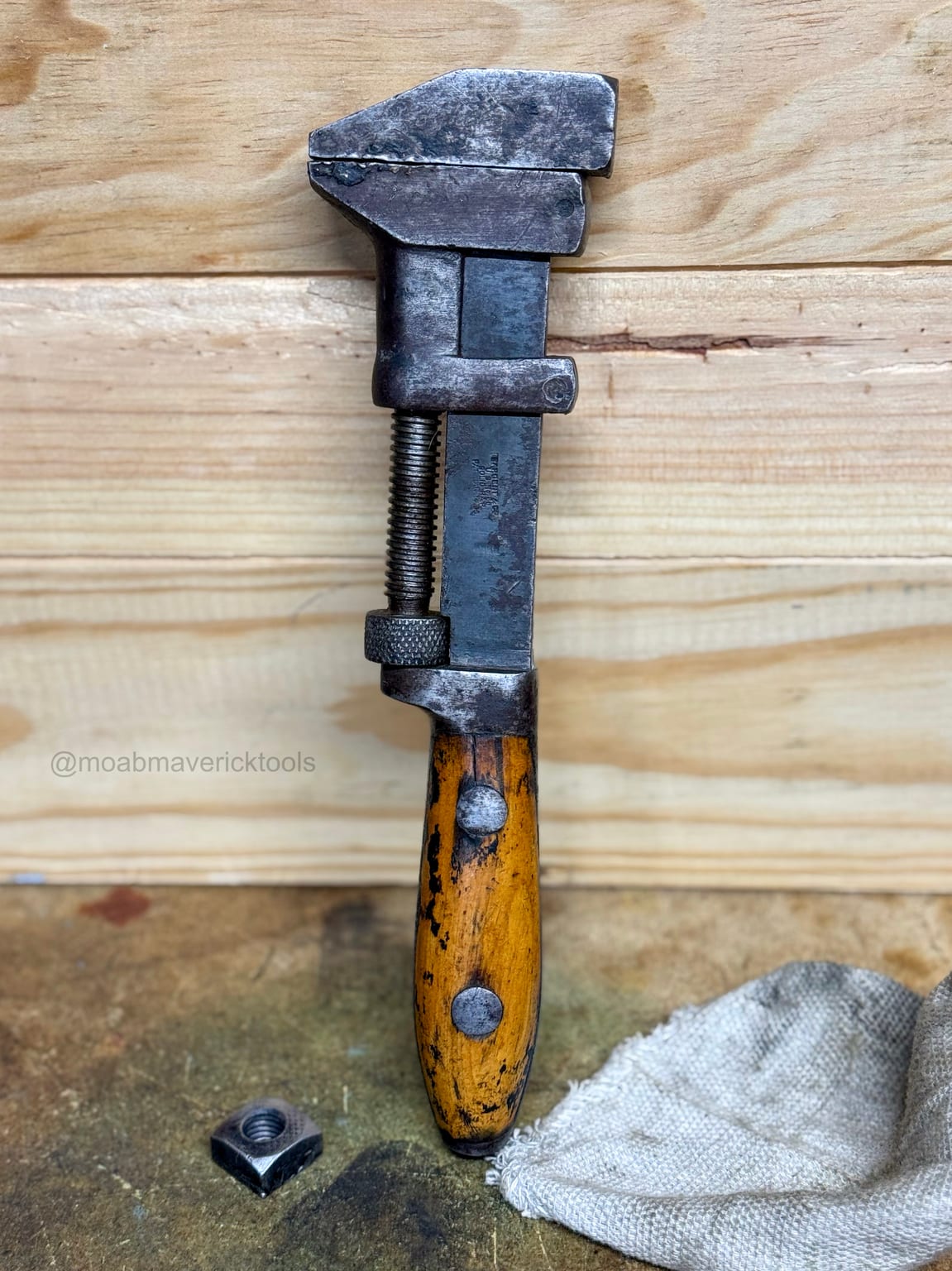
The wrench was made to be a tool. Someone bought it. Someone used it. Someone scratched names and numbers into it. Eventually it stopped working. Much later it landed on a stranger's workbench, worked again, surrendered a few of its secrets, and moved on to another owner.
I'm just one more person in that chain.
What We Lose When We Make Old Things New
There is nothing inherently difficult about making an old piece of steel shiny.
Given sufficiently aggressive abrasives, I could have made the Sargent wrench much brighter. The handle could have been sanded until the dents disappeared and the wood became uniformly pale. A new finish could have made it gleam.
It might have photographed beautifully.
And somewhere along the way, Hank might have disappeared.
So might Henry.
So might H-6036.
A few more passes could have made an already faint factory stamp harder to read instead of easier.
The wrench would have looked newer while becoming less complete.
That is the paradox at the center of restoring old tools: sometimes improving the object means doing less to it.
Not nothing.
Less.
Stop the deterioration. Repair what prevents the tool from functioning. Stabilize what is failing. Clean enough to reveal the object rather than replace its surface with your own work.
Then know when to put the abrasive down.
Because an old tool is more than the design its manufacturer intended.
It's also everything that happened afterward.
The Wrench Is Gone. The Story Isn't.
The Sargent No. 88 has another owner now.
But I still have the photographs from when it arrived frozen and dirty. I have photographs of the Kroil soaking into the adjuster, of the first scratched markings appearing, of the barely legible factory stamp, of Hank and Henry, and of the finished wrench.
And, unusually, I still have the conversation recorded while I was discovering those things.
That matters because memory tidies stories up.
Documentation doesn't.
The record shows that I didn't recognize some grand historical treasure the moment I saw it. I bought an old wrench that looked like a restoration candidate. I didn't know the maker. I didn't know whether the adjuster would free up. I mistook personal markings for the maker's mark. We made incorrect guesses while trying to read the stamp. Questions produced answers, and answers produced more questions.
That's much closer to what working with old tools is actually like.
You don't always know what you're preserving until you start preserving it.
Today, someone researching a Sargent Solid Bar wrench can find photographs and information from the listing I created for this one. Eventually marketplace listings disappear, search results change and another little piece of information becomes harder to find.
That's one reason this archive exists.
The wrench itself can continue on without me.
Its story doesn't have to disappear with it.
And somewhere out there is another anonymous old tool covered in rust and grime, waiting for someone to clean it just carefully enough to discover that it isn't anonymous at all.