
Tool Detail
Vintage J.P. Danielson 10” Stillson Pipe Wrench
Wood Handle Jamestown NY – Early 1900s Hand Tool
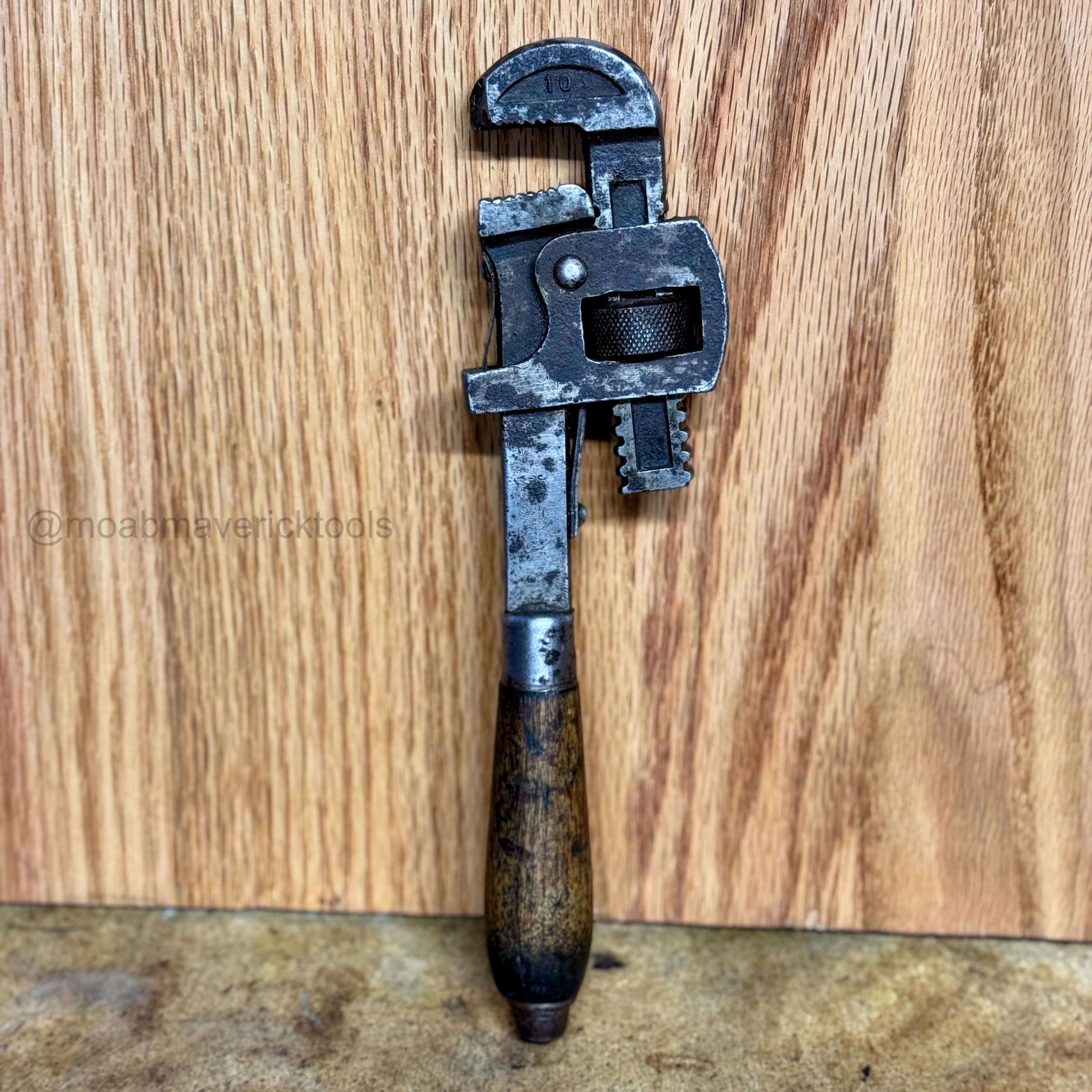
Vintage J.P. Danielson 10” Stillson Pipe Wrench – Wood Handle – Jamestown, NY
Early J.P. Danielson Co. Inc. Stillson-pattern pipe wrench with original wood handle. Cleaned, serviced, and ready for display or light shop use.
Details
- Maker: J.P. Danielson Co. Inc. – Jamestown, N.Y., U.S.A.
- Pattern: Stillson pattern pipe wrench
- Size: 10” (marked “10” on the jaw)
- Markings:
- Jaw: “GUARANTEED” / “FORGED STEEL” / “10”
- Shank: “J.P. DANIELSON CO INC / STILLSON PATTERN / JAMESTOWN, N.Y. U.S.A.” (partially worn but legible)
- Construction: Forged steel head and shank, turned wood handle with steel ferrule and end cap
- Overall length: approx. 11–11½” (see photos with ruler for scale)
- Jaw travel: adjusts smoothly through full range
Dating note
Etsy requires a specific decade, so “1900-1909” is selected as the best fit.
The history of J.P. Danielson is limited. A first J.P. Danielson company operated in Jamestown in the early 1900s alongside the origins of Crescent Tool, and a later J.P. Danielson Co. Inc. produced all-steel wrenches and crescent-style adjustables into the 1940s.
Documented examples from the later company show all-metal No. 10 wrenches, and I have not found any clear examples of wood-handled Stillson-style wrenches from that period. This piece is a wood-handle Stillson marked “J.P. Danielson Co. Inc.,” so the most likely date is early 1900s, possibly tied to the first Danielson era, but a later date (up to the early 1940s) can’t be completely ruled out.
Condition
Honest working patina with repairs noted:
- Jaw: Teeth are present and still bite, but there is a noticeable chip / missing corner at the very nose of the fixed jaw (see close-up photos). This doesn’t stop it from gripping pipe but is a permanent cosmetic/mechanical flaw.
- Handle: Original wood handle had a long longitudinal crack that has been CA-glued and stabilized. The crack line is still visible but tight and solid. No loose movement at the ferrule.
- Metal shows dark, stable patina with scattered pitting and staining from a long working life.
- Adjustment screw and sliding jaw move freely; spring and mechanism function as they should.
This is not a mint collector piece – it’s an old working wrench that’s been cleaned, stabilized, and put back into “good user / display” condition.
Restoration & care
I keep restorations minimal: clean, stabilize, protect – not polished to look new.
Work performed on this wrench:
- Mineral spirits wipe-down to remove old grease and grime
- Old red user paint removed with acetone (some flecks remain in deep crevices)
- Light file work on the chipped jaw to knock down sharp edges
- Active rust removed with 3M abrasive pad and WD-40, leaving the original patina
- Handle crack wicked with CA glue and clamped, then sanded lightly with 320 grit
- Metal treated with Ballistol, then finished with paste wax for a dry protective surface
- Threads and moving parts lubricated with Hoppes oil
- Wood handle finished with boiled linseed oil and a final coat of beeswax balm
It’s ready to hang on the wall, drop in a vintage tool roll, or live on a shop shelf as a piece of early 20th-century tool history.
Good for
- Vintage tool collectors
- Industrial / rustic décor
- Shop display in a plumbing, machinist, or hand-tool themed space
- Photography prop or period set dressing
Ships well-packed and padded so it arrives in the same condition you see in the photos.