
Tool Detail
Vintage Corner Chisel Ohio Tool Co 90 Degree Socket Chisel Mortise Woodworking Timber Framing Tool
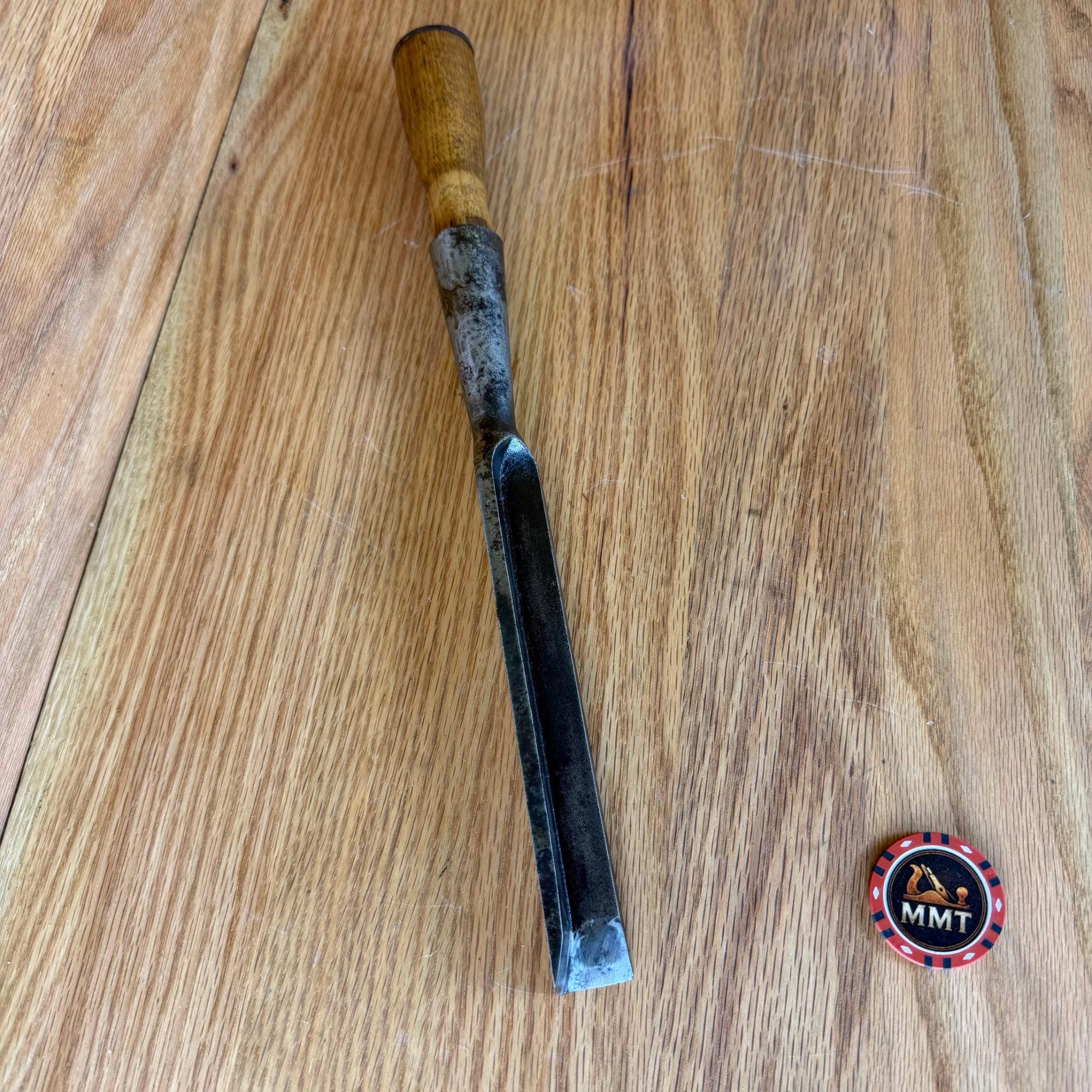
Vintage Ohio Tool Co. 90-degree corner chisel, made in Columbus, Ohio, during the late 19th or early 20th century. This traditional woodworking tool features a forged steel V-shaped blade, socket-mounted hardwood handle, and leather striking pad. Carefully cleaned, sharpened, oiled, and waxed while preserving its original patina and working character. Ideal for traditional joinery, mortise work, timber framing, or a vintage woodworking tool collection.
Detailed Description
A vintage Ohio Tool Co. corner chisel, manufactured in Columbus, Ohio, during the late 19th or early 20th century.
Designed for traditional woodworking and timber framing, this specialized chisel features two cutting edges arranged at 90 degrees. Its distinctive V-shaped blade allows woodworkers to square mortises and clean inside corners left by drilling or other cutting operations.
The chisel retains its hardwood handle, tapered steel socket, and an unusual leather striking pad on the handle’s butt. The Ohio Tool Co. maker’s stamp remains visible on the steel.
Carefully restored for continued use while preserving the character of a tool that has already served generations of craftsmen.
Tool Details
- Manufacturer: Ohio Tool Co.
- Origin: Columbus, Ohio, USA
- Type: 90-degree socket corner chisel
- Estimated Period: Late 19th to early 20th century
- Overall Length: Approximately 12¼ inches
- Construction: Forged steel blade with tapered socket
- Cutting Geometry: Two perpendicular cutting edges with inside bevels
- Handle: Turned hardwood
- Striking Surface: Leather pad fitted to handle butt
- Markings: OHIO TOOL CO. stamped into the steel
- Inventory: WW-C-26-0260
Condition
This is a restored vintage woodworking tool showing authentic wear consistent with its age and previous use.
- Steel surfaces retain original darkened patina, staining, and scattered surface pitting.
- Both cutting edges have been sharpened while preserving their original geometry.
- The Ohio Tool Co. maker’s stamp is worn but identifiable.
- The hardwood handle shows scratches, grain checking, and age-related wear.
- The leather striking pad remains attached and shows considerable wear, particularly in the center.
- The tapered socket and handle appear securely fitted.
- No major structural damage is apparent.
This tool has not been polished or refinished to look new. Its original character and evidence of use have been intentionally preserved. Please examine all photographs carefully, as they are part of the condition description.
Restoration
Restoration focused on cleaning, preservation, and returning the tool to serviceable condition.
- Removed surface oxidation and accumulated grime.
- Cleaned steel surfaces while preserving the maker’s stamp and original patina.
- Sharpened the two cutting edges, maintaining their 90-degree geometry and inside bevels.
- Cleaned and conditioned the hardwood handle.
- Preserved the existing leather striking pad.
- Protected exposed steel with light oil and paste wax.
- Finished the wooden handle with oil and protective wax.
The goal was to preserve the tool’s history while making it suitable for continued woodworking use.
Ideal Use
- Traditional mortise-and-tenon joinery
- Squaring mortises and inside corners
- Timber framing and furniture restoration
- Traditional hand-tool woodworking
- Antique woodworking tool collections
- Historic workshop displays
- Gifts for woodworkers and hand-tool enthusiasts
Historical Background
The Ohio Tool Company was established in Columbus, Ohio, in the mid-19th century and became a recognized American manufacturer of woodworking tools.
The company produced a variety of tools for professional craftsmen, including planes and chisels.
Corner chisels were specialized tools used to create clean, square internal corners in mortises and other joinery. Before modern power tools became commonplace, tools like this were important equipment for cabinetmakers, carpenters, and timber framers.
This example likely dates to the late 1800s or early 1900s, although its exact manufacturing date has not been established.