
Tool Detail
Vintage Erie Tool Works Pipe Vise
Bench Clamp Swivel Frame – Erie PA USA Cast Iron Shop / Industrial Decor
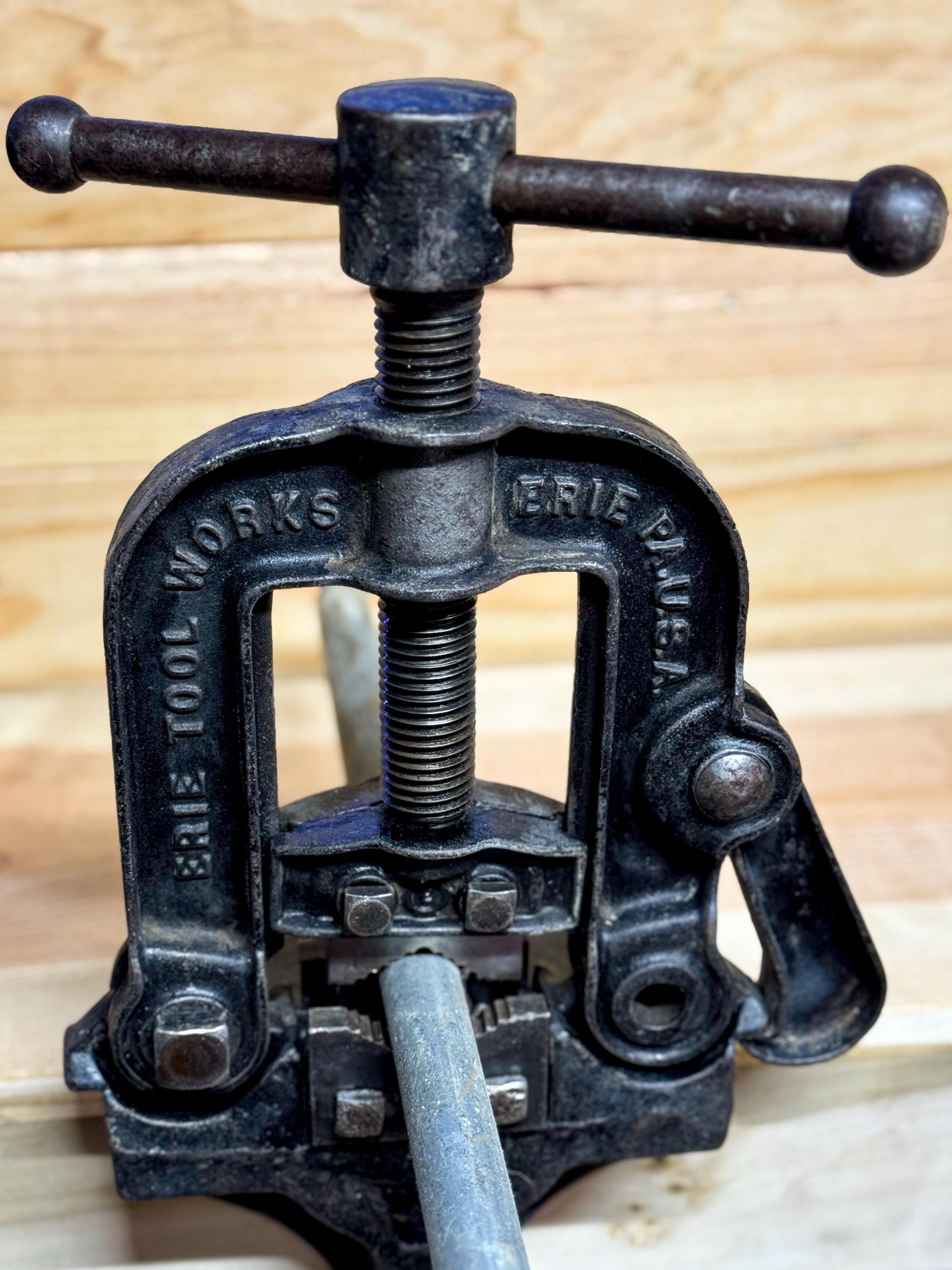
Heavy cast iron bench-mount pipe vise made by Erie Tool Works of Erie, Pennsylvania, USA. Fully disassembled, cleaned, lubricated, and waxed while preserving the original black paint and aged patina. Mechanically solid with good jaws and ready for use or industrial workshop décor.
Bullet Highlights
- Vintage Erie Tool Works bench pipe vise
- Raised “ERIE TOOL WORKS / ERIE PA. U.S.A.” lettering
- Bench clamp base with swing-open frame and lock lever
- Original jaws present, cleaned, and lightly re-dressed
- Fully disassembled, degreased, lubricated, and waxed
- Original black paint and honest shop patina preserved
- Slight bend in main screw – cosmetic, still smooth in use
- Ideal working vise or industrial workshop décor
- Made in USA cast iron
- Ships with printed care sheet
Maker & style
Vintage bench-mount pipe vise made by Erie Tool Works – Erie, PA, USA, a long-running American maker of vises and pipe tools. The vise clamps to the edge of a bench with a screw clamp and uses a swing-open frame with serrated jaws to grip round pipe stock. All cast in heavy iron with the original raised lettering, this piece works just as well as it displays. 
Features
- Bench-mount pipe vise with screw clamp, swivel/swing frame, and lock lever.
- Raised cast lettering: “ERIE TOOL WORKS / ERIE PA. U.S.A.” on the frame.
- Three original jaw plates: two lower, one upper, all removable and reversible.
- Original black paint remaining in many areas with honest shop wear and a dark iron patina.
- Jaw Opening:~2 1/2"
- Overall height and width: ~21" x 8 1/2"
- Weight: 15.5 lbs
Condition
- Mechanical:
- Main jaw screw runs smoothly through the working area. Runs tight through the final inch or so at the top.
- Lock lever pivots and cams properly and holds the frame solid when locked.
- Bench clamp screw runs smoothly and pulls the base tight to a bench edge.
- Jaws:
- All three jaw plates present with intact serrated teeth.
- Teeth have minor wear from use but still bite cleanly on pipe.
- Jaw pockets are clean and the jaws seat correctly when tightened on a pipe section.
- Cosmetics:
- Original black paint retained where sound, with scattered loss and rub-through on edges.
- Bare iron has been cleaned but not polished; shows a stable, dark patina with small nicks and dings from normal shop use.
- Small paint drips/splatters from an old shop repaint were reduced but not completely erased to keep the “working tool” character.
- Exact production date is unknown. Etsy requires a single decade for listing, so I’ve categorized this under “1940s”, but the design and markings are typical of early–mid 20th-century Erie Tool Works pipe vises.
No cracks or repairs were found in the castings.
Restoration Work Performed
- Completely disassembled: frame, base, lock lever, jaws, and all hardware separated and cleaned.
- Degreased with mineral spirits to remove old oil, dust, and shop grime.
- Jaw plates and hardware soaked and scrubbed, then lightly wire-brushed to remove rust without changing the original geometry.
- Jaw teeth carefully dressed by hand file to freshen the bite while preserving the factory shape.
- Main screw, clamp screw, and pivots flushed, then lubricated with light oil; excess wiped to a thin working film.
- Original paint and patina preserved—no modern repaint or heavy grinding.
- All exposed cast iron protected with paste wax, hand-buffed for a dry, low-sheen finish.
This leaves the vise clean, stable, and ready to use while still looking like a genuine old shop tool, not a freshly painted reproduction.
Use & Display Ideas
- Put it back to work as a small pipe vise on a plumbing or metalworking bench.
- Mount it to a reclaimed wood plank for instant wall-hung industrial décor.
- Display on a workbench, shelf, or in a man-cave / garage as a piece of early-mid 20th-century American tool history.
- Great prop for workshop-themed photo backdrops or retail displays.