
What Is a Tool?
A wrench is obviously a tool. A vise, micrometer, slide rule, forming block, toolbox, and spool of solder make the boundary less obvious—and more useful to think about.
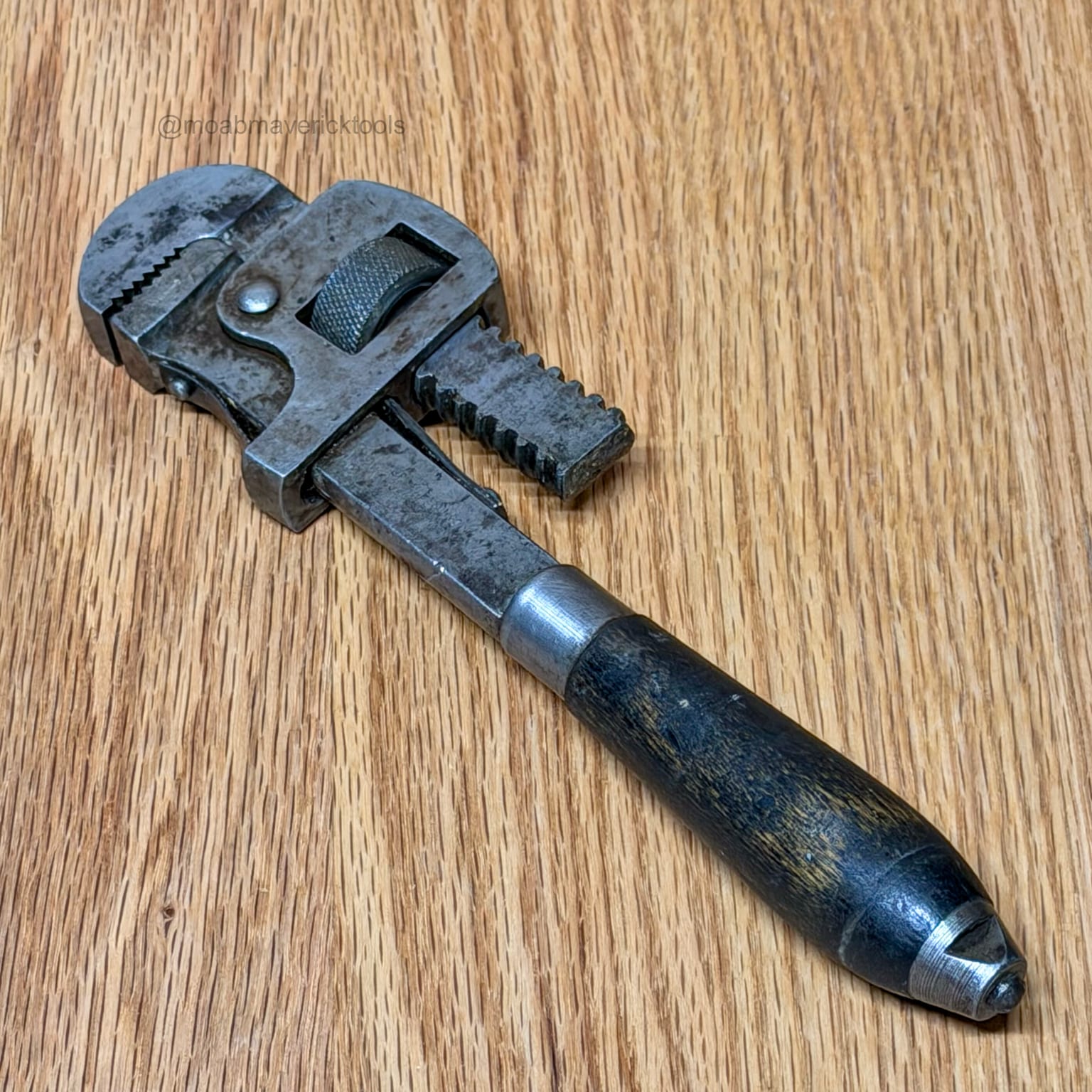
A pipe wrench is a tool.
That statement is so obvious that it hardly seems worth making. The J.P. Danielson Stillson-pattern wrench below grips pipe, gives the user leverage, and allows a pair of human hands to apply torque they could not apply nearly as effectively on their own.
It is exactly the sort of object most of us picture when we hear the word tool: a durable implement held in the hand and used to perform physical work.
But that definition starts breaking down almost immediately.
A Tool Does Not Have to Move
Consider the Erie Tool Works pipe vise.
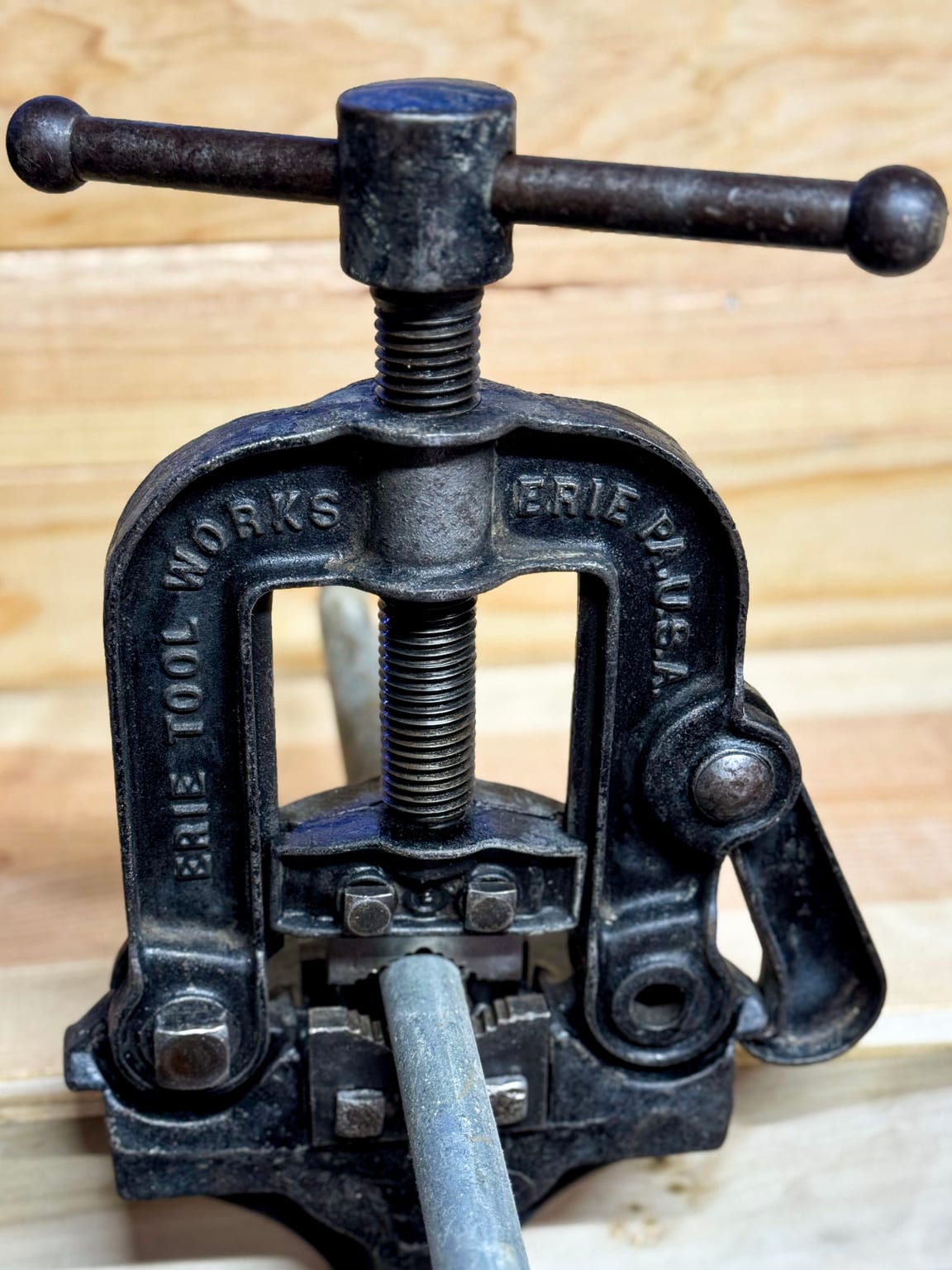
The vise does not turn the pipe, cut it, thread it, or strike it. Once clamped to a bench and tightened around the workpiece, its entire purpose is to keep something else from moving.
Yet calling it something other than a tool would be difficult to defend. The vise provides constraint rather than motion. It creates a stable relationship between the worker, the workpiece, and whatever other tool is being used on that workpiece. Remove the vise and many operations become harder, less precise, or unsafe.
So motion cannot be the defining characteristic. A tool can contribute to work by holding something still.
A Tool Does Not Have to Change the Workpiece
The Starrett No. 440-A depth micrometer pushes the definition in another direction.
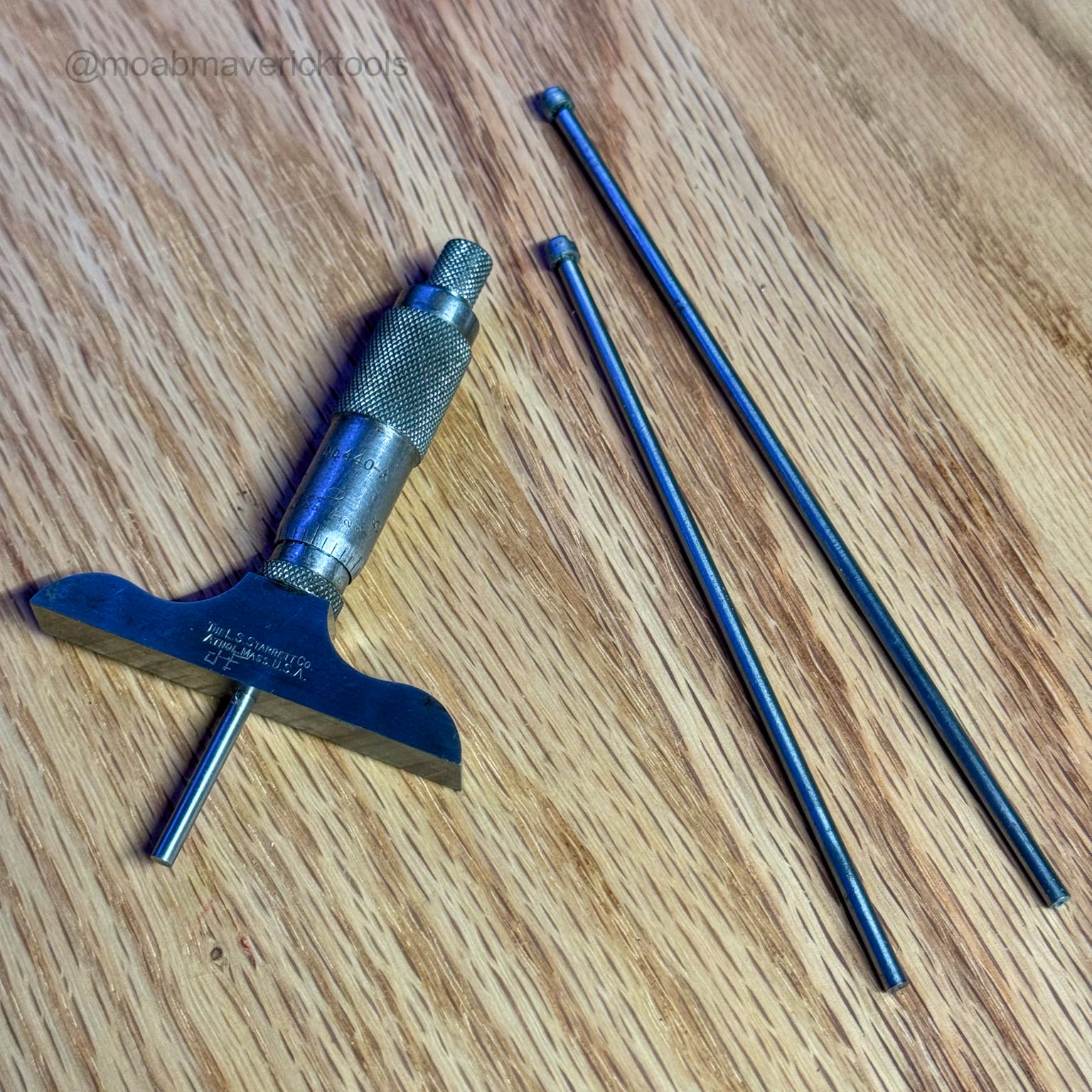
It does not shape the workpiece at all. Used properly, it leaves the object being measured exactly as it found it. What it changes is the worker's knowledge.
That is still useful work. Precision manufacturing depends as much on knowing dimensions as it does on cutting material. A machinist who can remove metal but cannot determine how much has been removed is missing half the process.
The micrometer suggests a broader definition: a tool does not have to transform the object in front of it. It can extend our ability to observe, compare, and make decisions about that object.
Tools Can Extend the Mind
The Keuffel & Esser N4081-3 slide rule takes that idea one step farther.
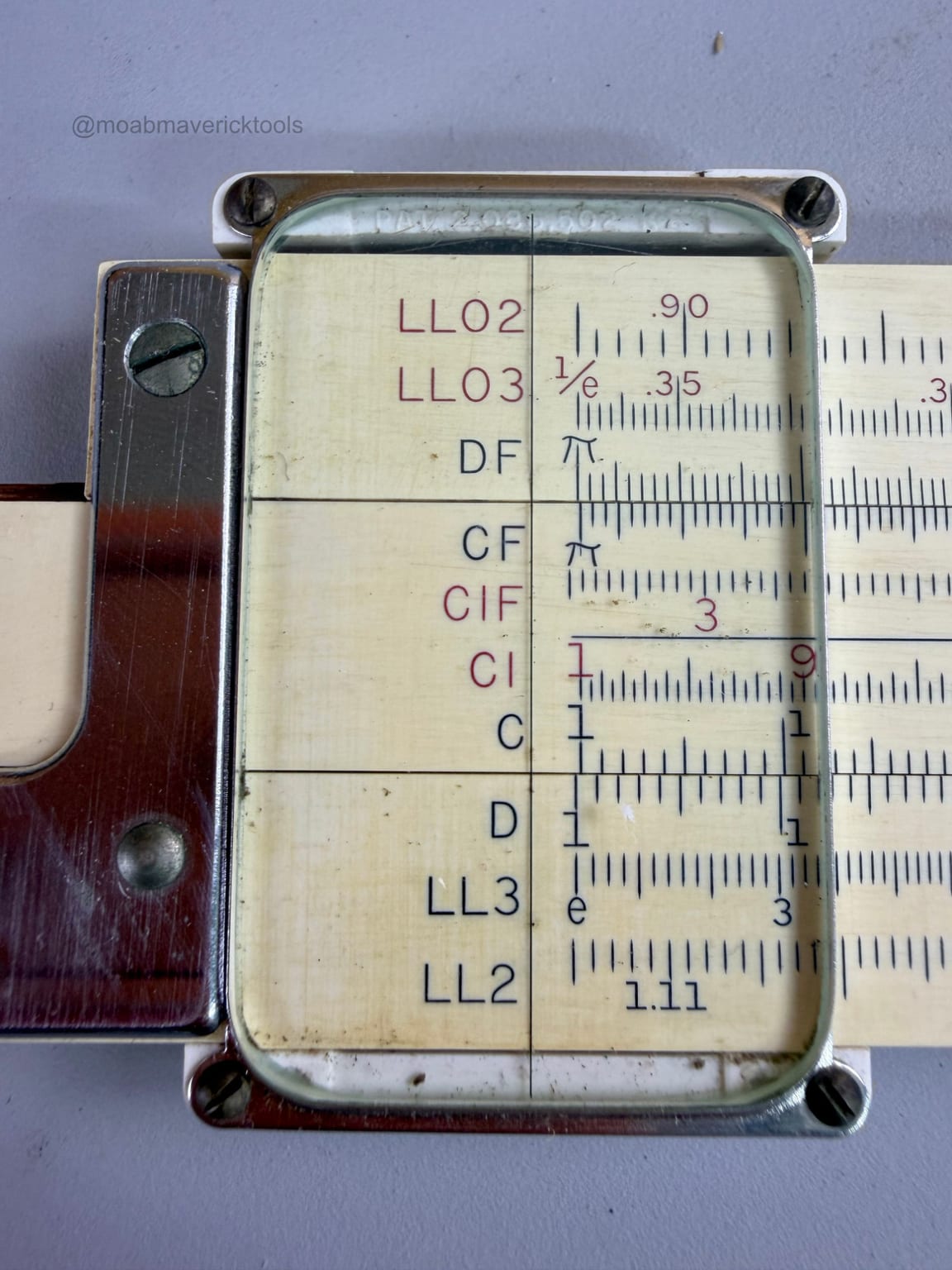
A slide rule does not grip, cut, strike, hold, or measure the workpiece. In fact, the workpiece may not even exist yet. The instrument helps its user multiply, divide, work with logarithms and trigonometric functions, and solve the calculations needed before or during technical work.
For generations, engineers, draftsmen, machinists, scientists, and others used instruments like this to extend what they could calculate accurately and efficiently.
Tools do not merely extend our muscles. They extend our abilities.
Once that is admitted, the boundary around the word tool becomes much wider than a drawer full of wrenches and screwdrivers.
What If the Tool Is Just a Shape?
The cast-iron gutter end-cap form is stranger.
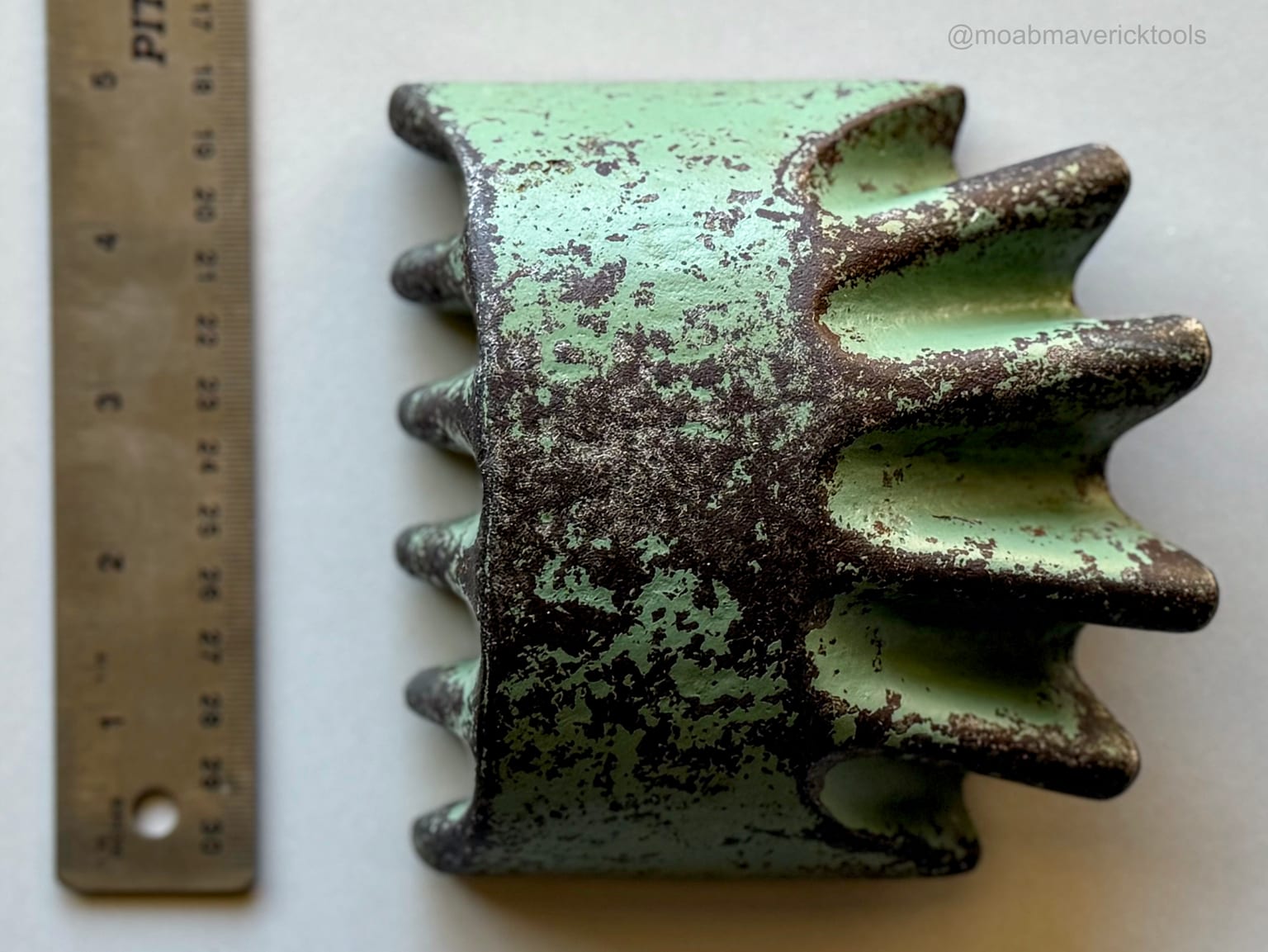
Viewed by itself, it can look like an oddly shaped piece of cast iron. There is no handle, no hinge, no screw, no cutting edge, and no mechanism to operate. Nothing on it moves.
Turn it over, however, and the object begins to explain itself.
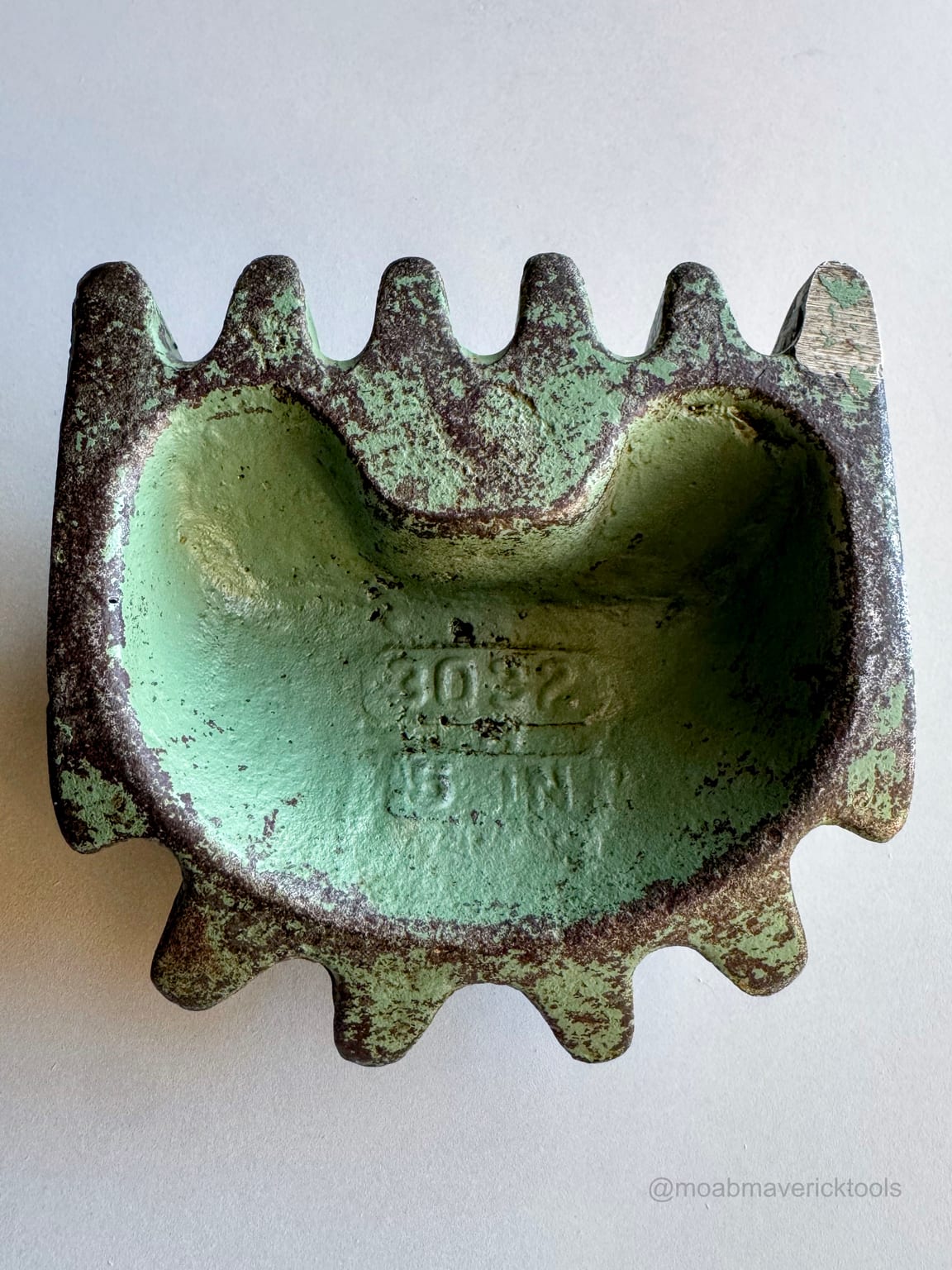
The cast shape is not decorative or accidental. Its curves, projections, and working surfaces exist because sheet metal was formed against them. The worker supplied the motion and force; the form supplied the geometry.
That makes it a passive tool, but passive does not mean unimportant. A forming stake, anvil, die, mold, bending form, or fixture can determine the final shape of a piece of work without containing a single moving part.
Sometimes the most important thing a tool contributes is simply its shape.
What About the Things That Support the Work?
The PARK steel toolbox, BX-M-25-0011, moves us closer to the boundary.
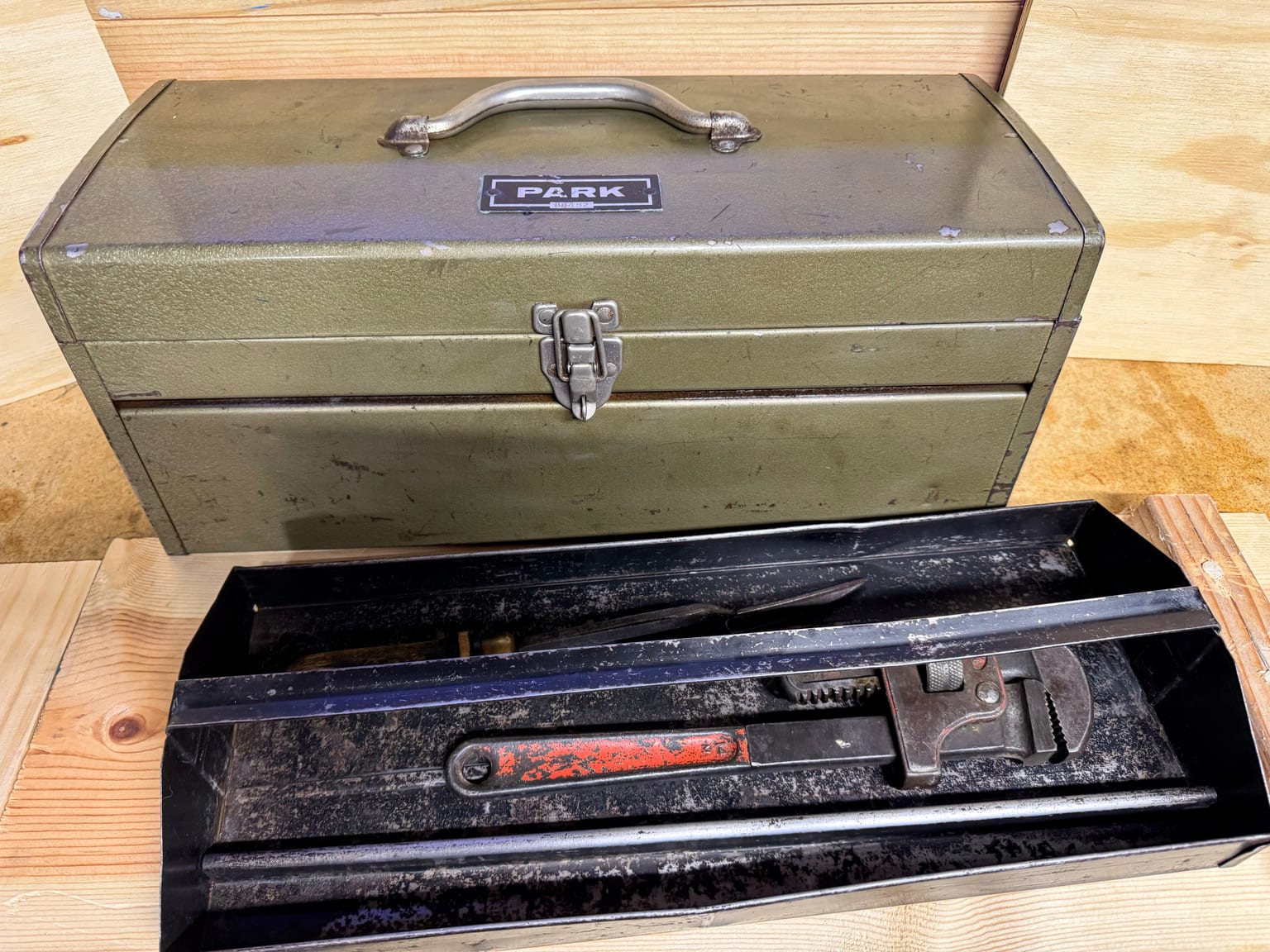
It does not cut, measure, grip, calculate, or shape anything. Its job is to carry, protect, and organize the objects that do.
A toolbox is so closely associated with tools that we rarely stop to ask whether the box itself belongs in the same category. Strictly speaking, perhaps it does not. Nothing is gained by stretching the word tool until everything found in a workshop fits inside it.
But excluding the toolbox from the story entirely would be equally artificial. Its construction reflects the tools it was intended to carry and the way its owner worked: portable, durable storage designed around access to the equipment needed for a job.
That suggests a useful second category: tool-adjacent objects—things whose historical and practical significance comes substantially from their relationship to tools, trades, crafts, or making things.
That is a more useful boundary than pretending every object associated with work must itself be a tool.
Essential to the Work Is Not the Same as Being a Tool
Kester Radio Solder presents a different problem.
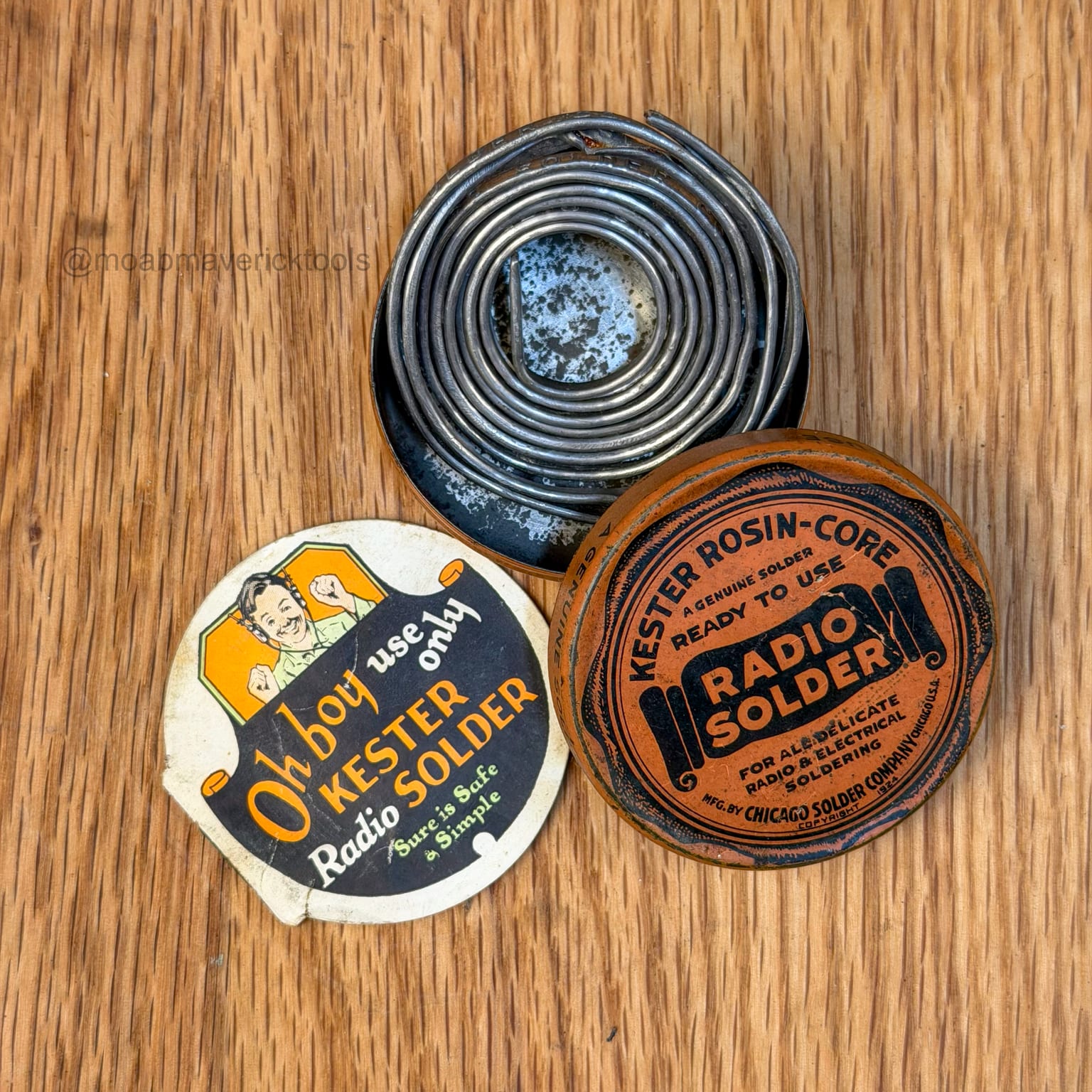
The solder was manufactured specifically for technical work. It would have been used with tools, by people doing skilled work, to create electrical connections. Without solder, the operation could not be completed.
But the solder itself is consumed. A length is heated, melted, and incorporated into the thing being made or repaired. It is material used by the process rather than a durable implement used to perform the process.
That distinction gives us another useful category: consumables. Solder, abrasives, lubricants, fluxes, adhesives, finishes, and similar materials can be indispensable to a trade without becoming tools merely because tools cannot do the job without them.
The distinction is not a judgment about importance. It is a distinction about function.
So What Counts?
There probably is not a single definition of tool that handles every edge case without becoming either too narrow or so broad that it stops being useful.
For the purposes of Moab Maverick Tools, a practical definition matters more than a philosophical one. A tool is a durable object intentionally used to extend a person's ability to perform work: by applying or multiplying force, holding or constraining a workpiece, cutting or shaping material, measuring or observing, calculating, guiding, forming, or otherwise enabling an operation.
That comfortably includes the wrench, vise, micrometer, slide rule, and gutter form even though they perform radically different functions.
It does not require us to call the toolbox a tool. The toolbox is tool-adjacent because its purpose and history are inseparable from the tools and work it supported. Nor does it require us to call the solder a tool. The solder is a consumable used in the work.
Those distinctions matter for MMT because the archive would become less coherent if tool simply meant anything old I find interesting. At the same time, drawing the boundary so tightly that only conventional hand tools qualify would discard objects that can tell us just as much about how people worked.
The useful question is not whether an object resembles a hammer or a wrench.
It is what role did this object play in getting the work done?
That question leaves room for tools that cut, grip, measure, calculate, hold, guide, and form. It also leaves room beside them for the boxes that carried them, the consumables they used, and other objects whose meaning comes directly from the trades and working lives around them.
The boundary stays meaningful without becoming a wall.