
Tool Detail
Antique Bemis & Call Combination Pipe Monkey Wrench Wood Handle Vintage Adjustable Tool
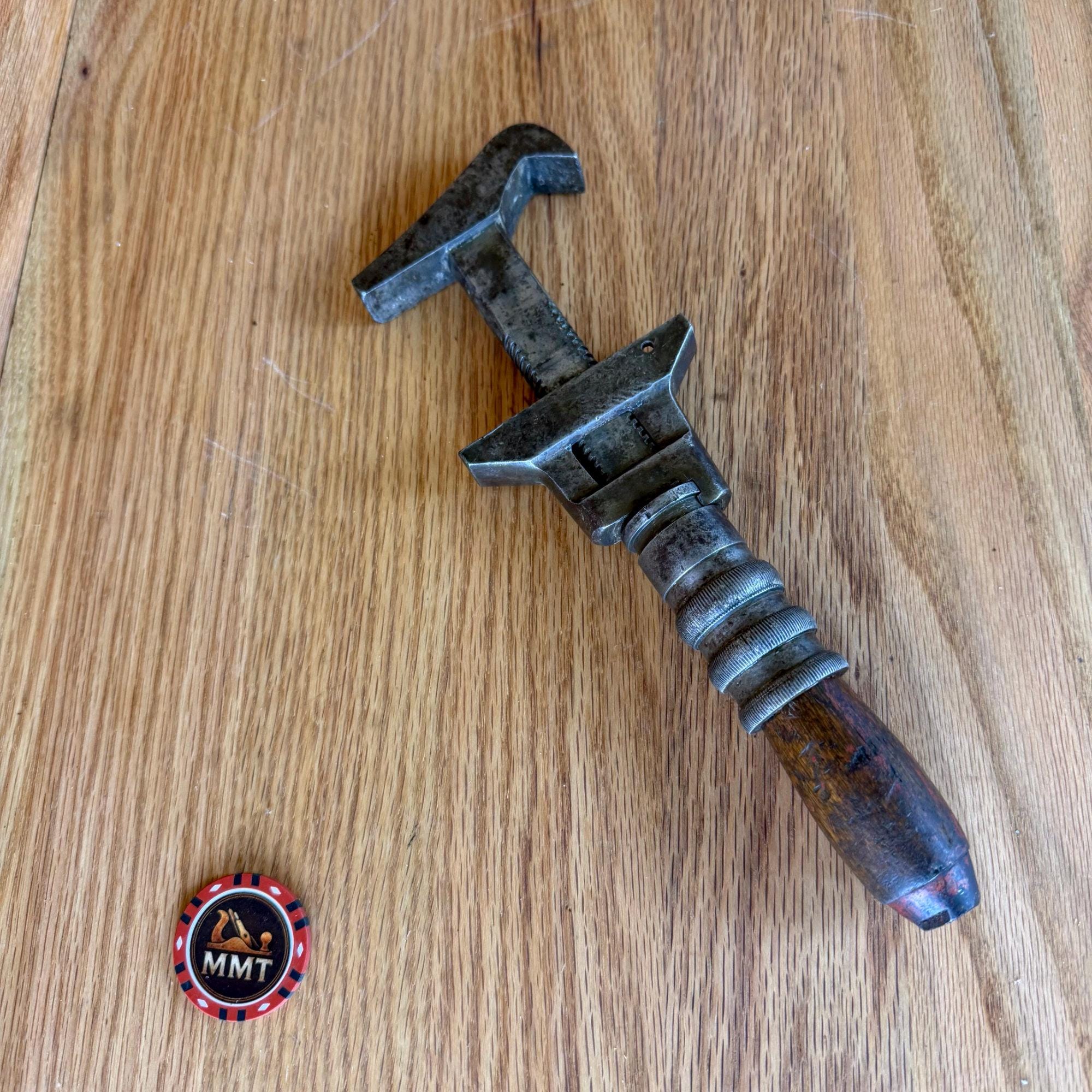
Antique Bemis & Call H & T Co. combination wrench from Springfield, Massachusetts, combining a traditional adjustable monkey wrench with a pipe-gripping jaw in one distinctive tool.
This example retains its original wood handle with wonderfully worn red paint, along with the darkened steel surfaces, machining marks, and working wear accumulated over decades of use. The wrench has been carefully cleaned, lubricated, and protected while preserving those original surfaces rather than refinishing them.
An especially interesting detail is the matching “J / 9 / 19” stamping found on both the sliding shaft and lower jaw, indicating that those fitted components were marked as a matching pair during manufacture or assembly.
Please note: the small serrated insert from the pipe-gripping jaw is missing. The main adjustable/monkey-wrench mechanism is complete and operates through its full range, but the pipe-wrench function is incomplete. This is disclosed in both the description and photographs.
Details
- Maker: Bemis & Call H & T Co.
- Location marked: Springfield, Mass., U.S.A.
- Type: Combination pipe and monkey wrench
- Approximate length: 11 inches closed
- Steel construction with wood handle
- Multi-ring knurled adjustment sleeve
- Matching J / 9 / 19 markings on shaft and lower jaw
- Original worn red-painted handle
- Adjustable jaw travels through its full range
- Made in the United States
- Circa early 20th century
Bemis & Call produced adjustable and pipe wrenches in Springfield, Massachusetts, and the company’s combination-wrench design is documented in 19th-century patent records. An 1885 patent assigned to Bemis & Call describes a single wrench intended to function both as a conventional monkey wrench on nuts and as a gripping wrench for cylindrical pipe or round stock. Later Bemis patent literature explicitly refers to this type as a “combination wrench.”
Condition
Good antique condition with substantial authentic working wear.
The adjustment mechanism operates smoothly through its full range. Steel surfaces show staining, patina, scratches, small dings, and other evidence of long use. The wood handle is solid and retains portions of its old red finish with considerable natural wear.
The serrated insert for the pipe-gripping jaw and its retaining hardware are missing. Because of this, the wrench should not be considered fully functional as a pipe wrench. Please review the detailed photographs, particularly the open recess and retaining hole in the lower jaw.
No attempt was made to fabricate a replacement for the missing original component.
Restoration
Carefully cleaned to remove accumulated grime and loose oxidation while preserving the original surface and patina. The adjustment mechanism was cleaned and lubricated, and exposed metal was protected with oil and wax.
The wood handle was gently cleaned, oiled, and waxed. Its surviving red finish, stains, wear, and other evidence of age were deliberately preserved.
No repainting, aggressive polishing, or cosmetic refinishing was performed.
Use
A distinctive example for an antique-tool or wrench collection, machinist display, workshop decor, or historical industrial display. The conventional adjustable-wrench mechanism remains functional; the pipe-wrench feature is incomplete because of the missing jaw insert.
Highlights
- Bemis & Call H & T Co.
- Springfield Massachusetts
- Combination wrench design
- Pipe and monkey wrench
- Approx. 11 inches long
- Original wood handle
- Worn original red finish
- Working adjustment mechanism
- Matching assembly markings
- Conservatively restored
- Authentic aged patina
- Made in USA
From the Journal
Tool Stories
How to Identify an Antique Wrench
A practical identification guide using wrench architecture, maker marks, measurements, patents, period documentation, and confidence levels to determine what an old wrench actually is.